
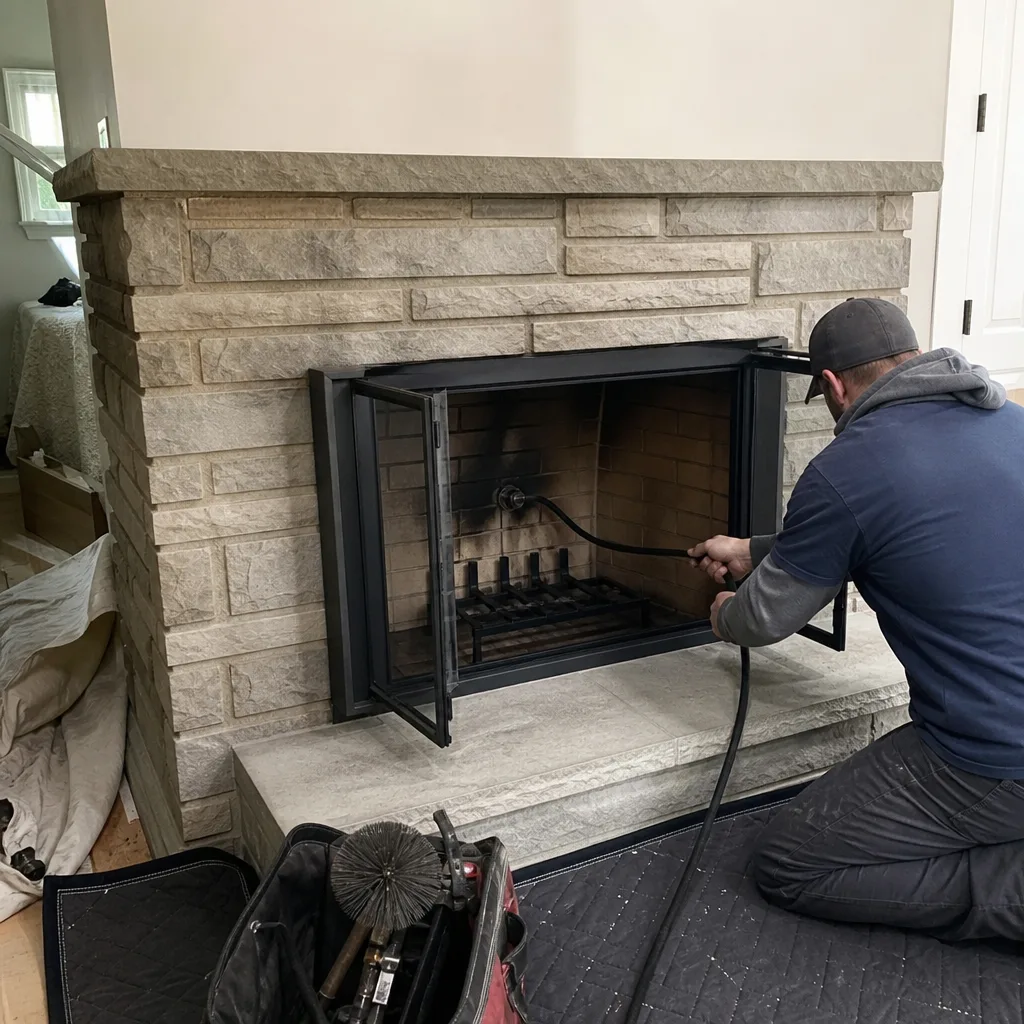
Level 1 sweep and inspection to the NFPA 211 annual standard - flue, crown, cap, and flashing checked and photographed
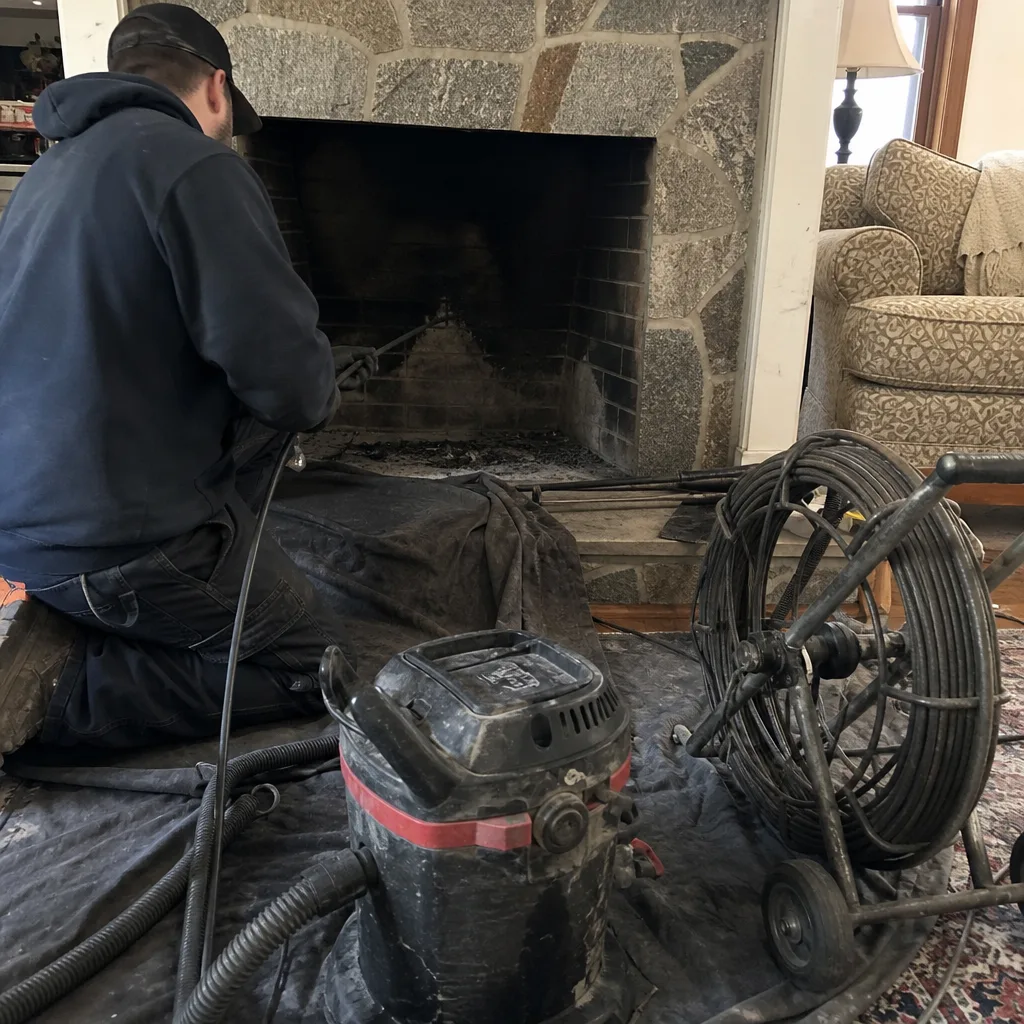
Chimney sweep logs do not sweep chimneys. They loosen some creosote - which then falls where a brush and vacuum still have to collect it.
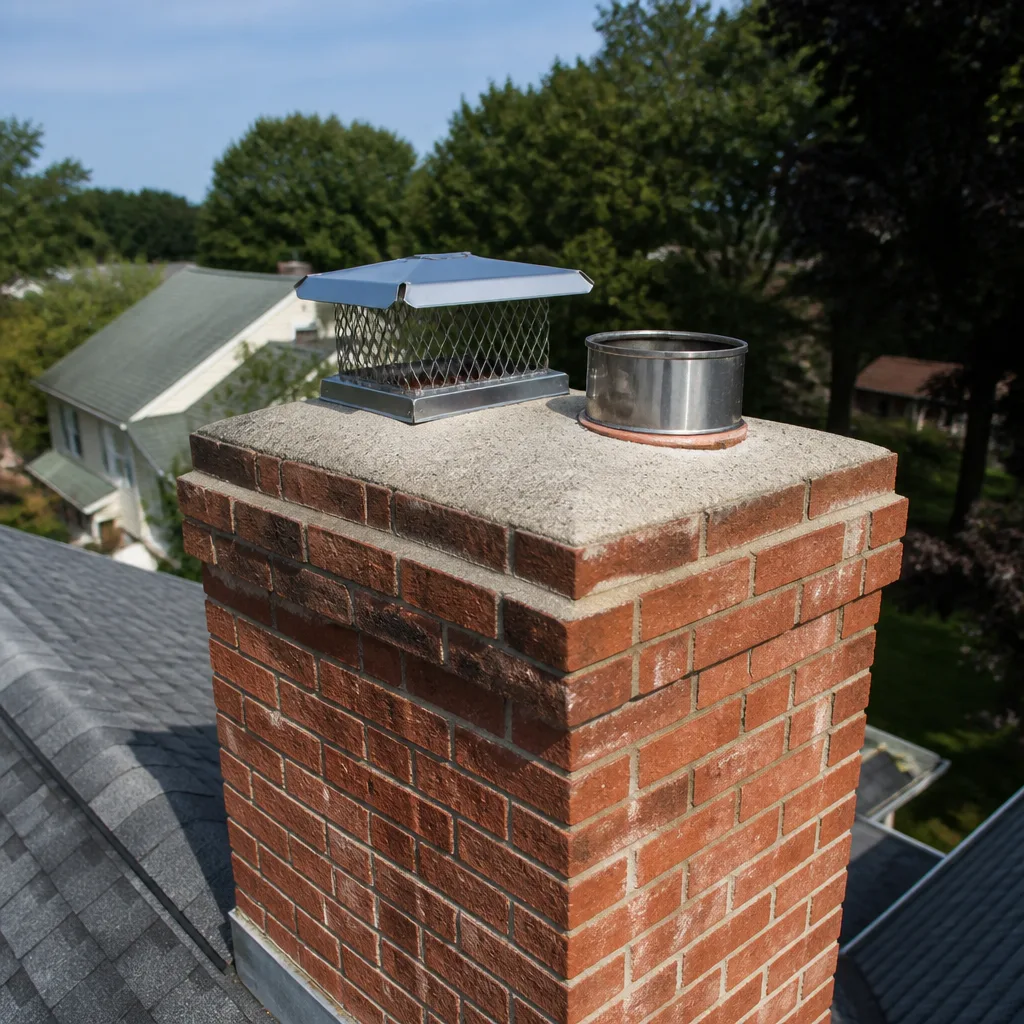
 Before
 After
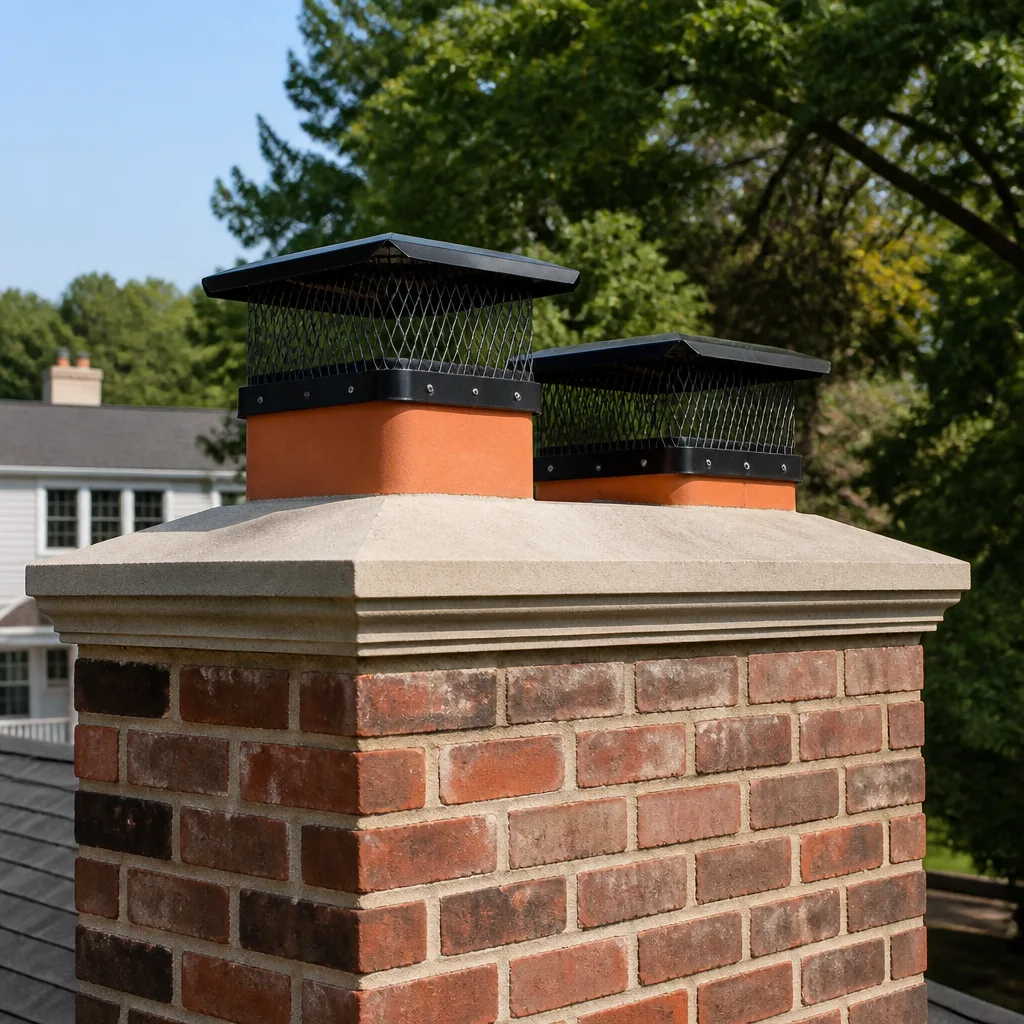
After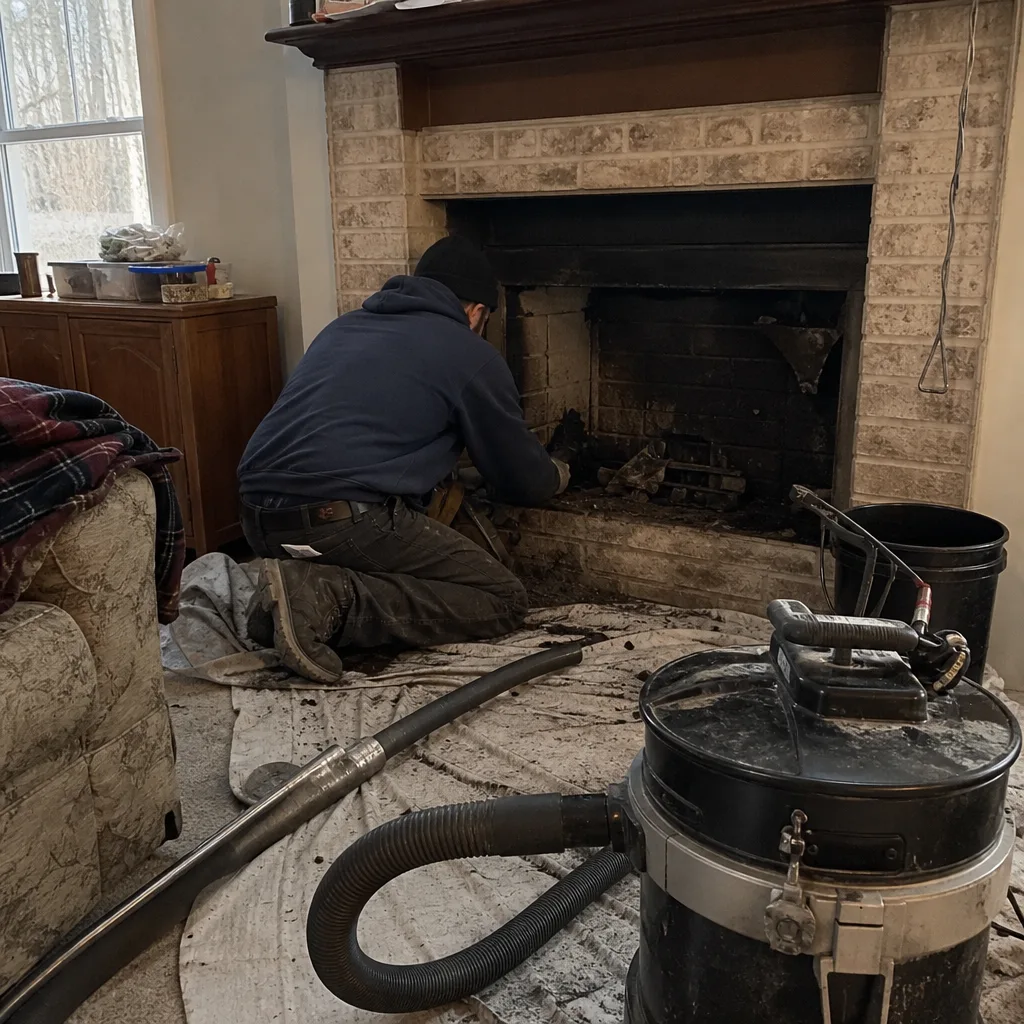 Before
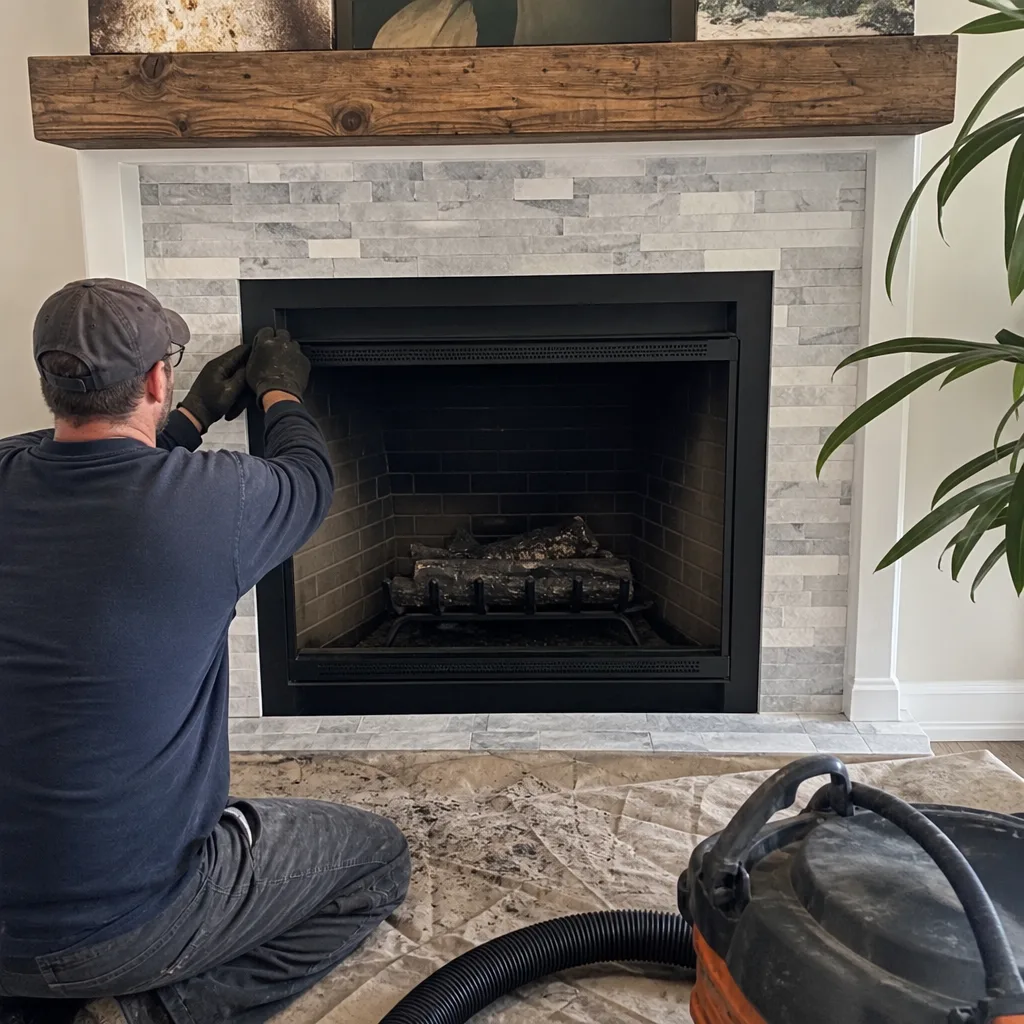 After
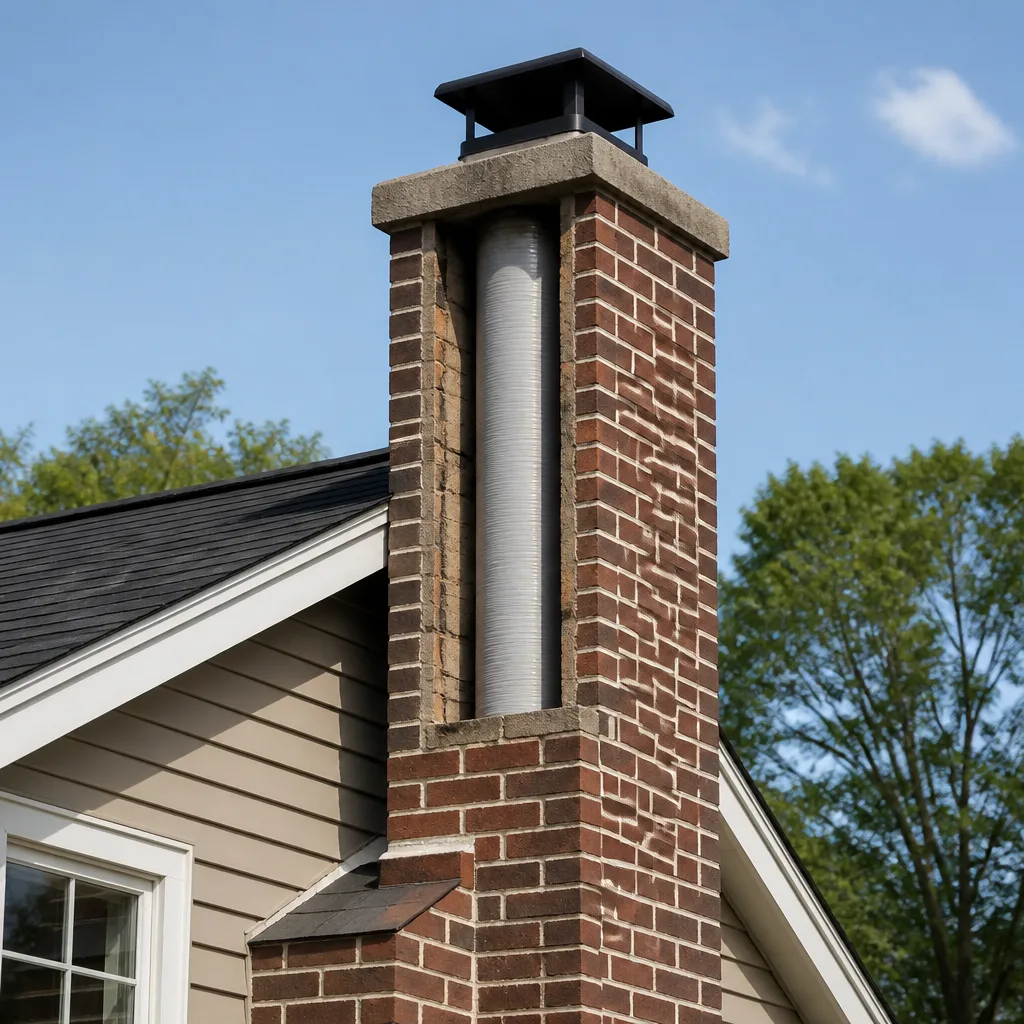
After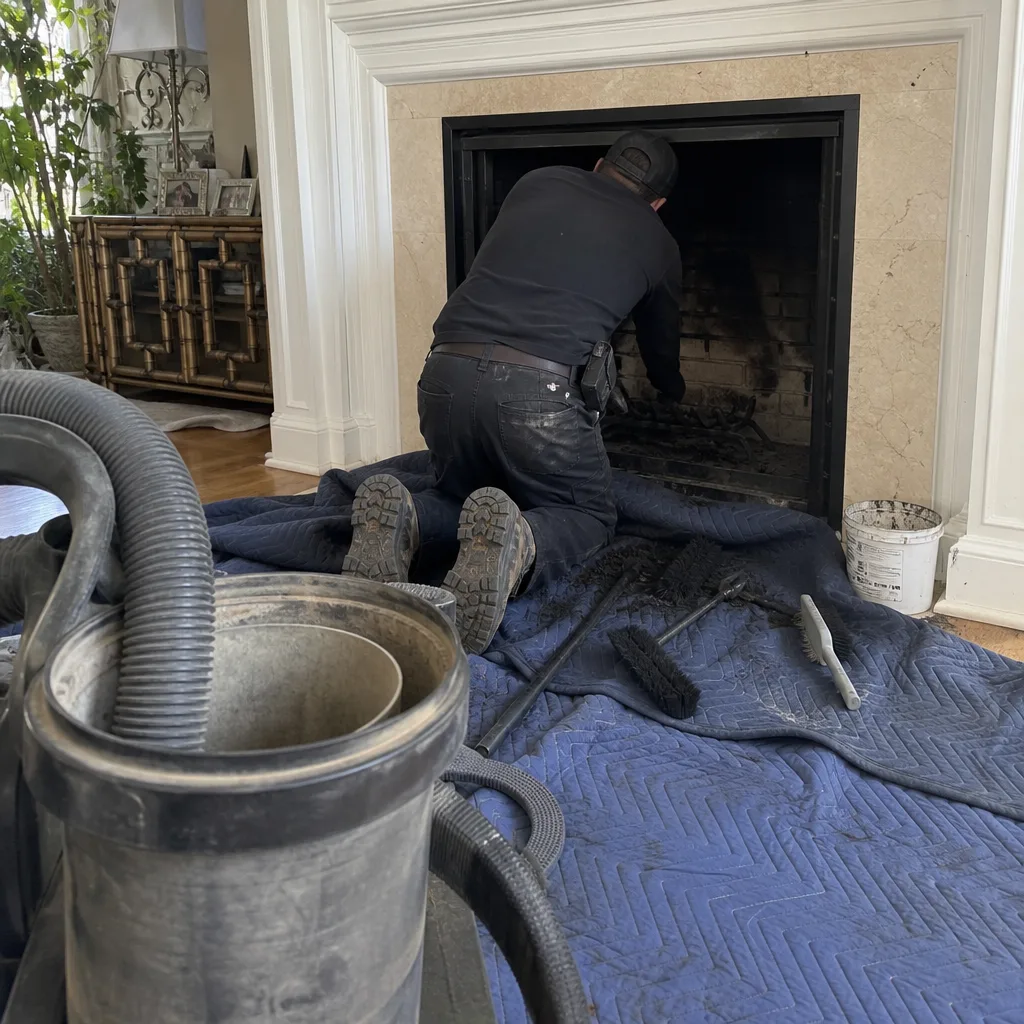 Before
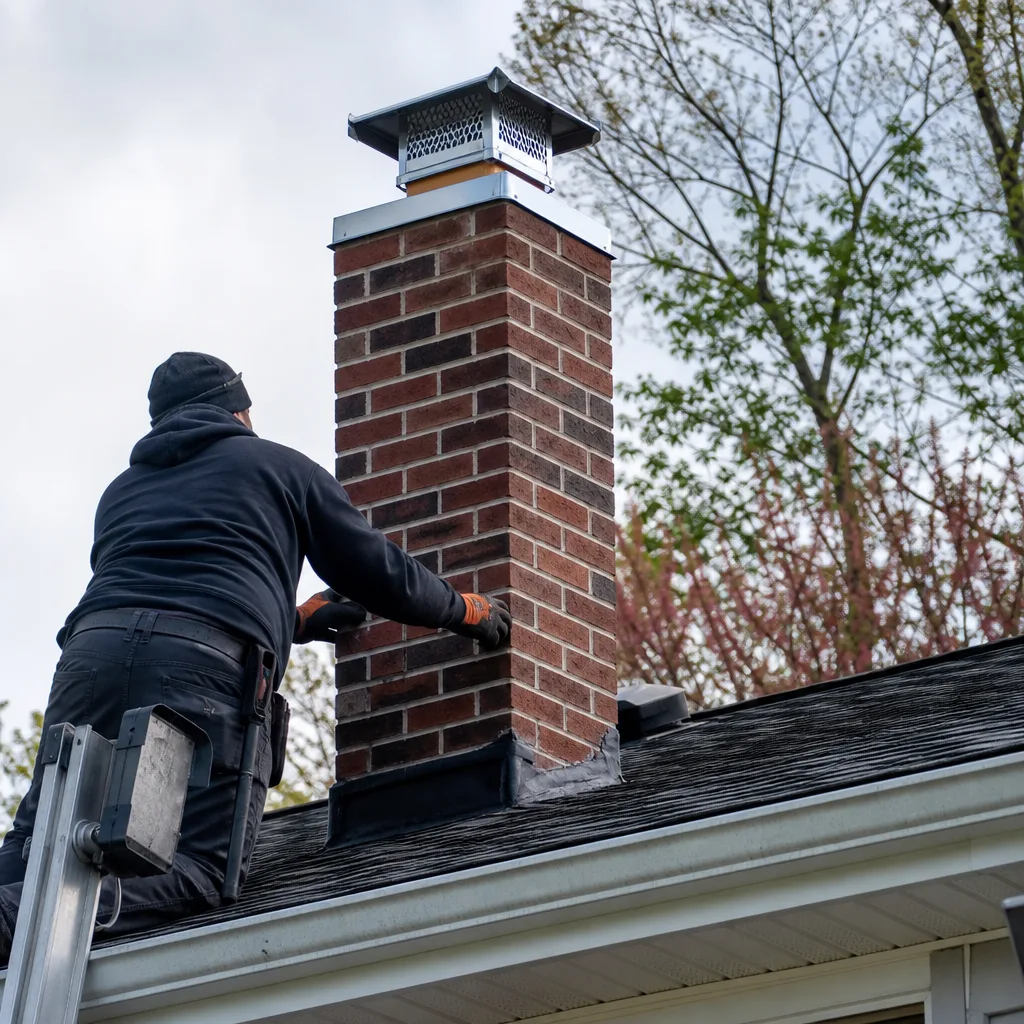 After
AfterFast, Reliable Chimney Cap & Crown Across Glastonbury Center
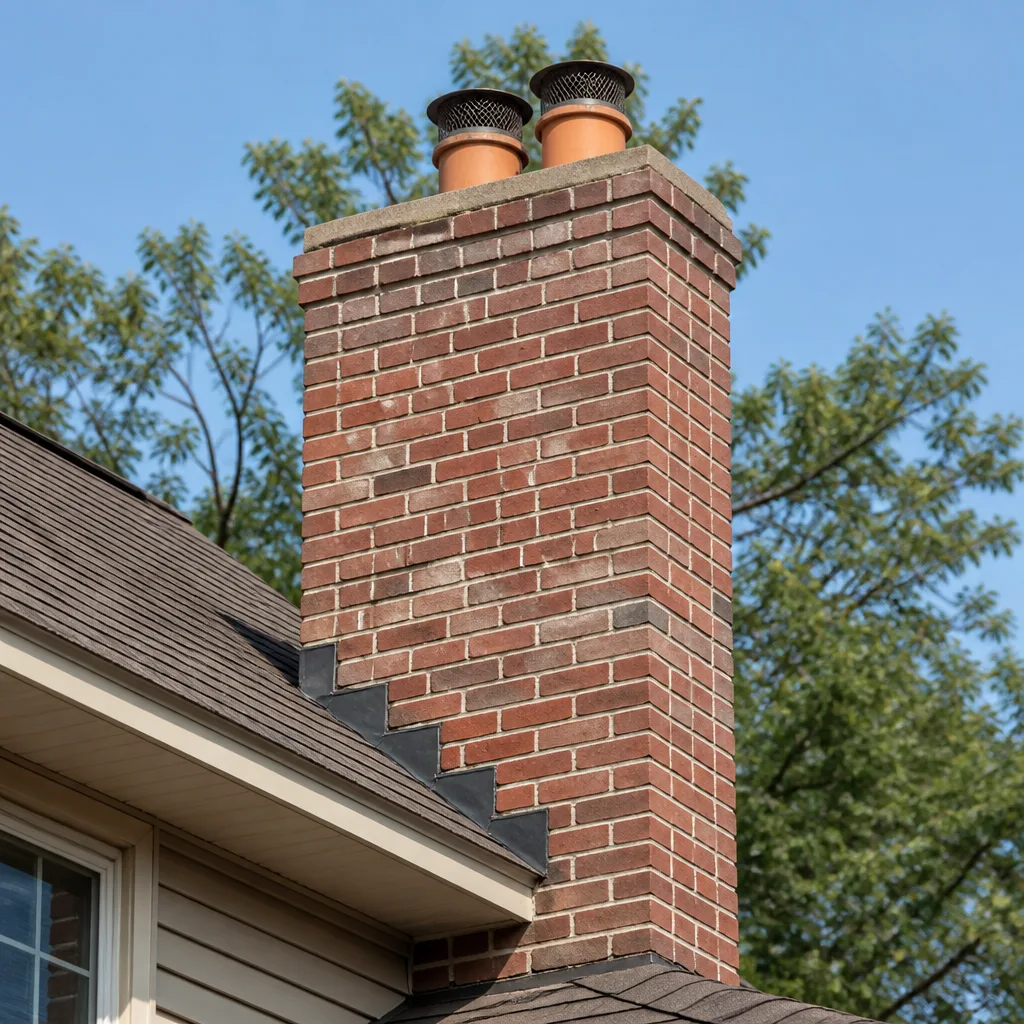
Chimney cap and crown work in Glastonbury Center usually runs between $425 and $1,900 depending on whether we’re repairing an existing crown, installing a replacement cap, or building a custom multi-flue cap for an 18th-century central stack. Most jobs on Main Street and the surrounding historic district take one visit. The work protects the single most vulnerable part of your chimney: the top. If you’re noticing spalled bricks, a rusted cap, or water staining on the ceiling near the flue, call Wendell and his crew at (860) 743-7732 and we’ll give you a straight answer about what actually needs doing, not what’s easiest to sell.
We know Glastonbury Center’s chimneys because we work on them all season, from the colonials on Main Street to the 1960s subdivisions off Hubbard Street. The old stacks here are different from anything you’ll find in East Hartford or Wethersfield, and the cap and crown take more abuse than most homeowners realize. A bad crown lets water into unlined masonry where it has no business going. A bad cap invites rain, birds, and backdrafts. Both are cheap to fix early and expensive to ignore.
Why Top Hat Chimney Is Glastonbury Center’s Preferred Chimney Cap & Crown Company
Top Hat Chimney has been working the same communities since 1999. Wendell Pike puts his name on every job we do in Glastonbury Center and you’ll see him around town. Local homeowners call us because we show up when we say we will, we publish our license number, and we back every single job with a written 90-Day Done Right Promise: if it’s not right, one call brings us back. No arguing, no fine print.
Our customers in Glastonbury Center tell us the same thing about the national outfits: the phone quote does not match the invoice. We do upfront pricing before any tool comes off the truck. The number you hear on the phone is the number you pay. And our phones are answered by a live person around the clock, 24/7. It may well be Wendell himself picking up at 9 p.m. when you’re worried about a storm hitting your exposed crown.
We also know the historic district rules and the access problems that come with them. Tight driveways, zero street parking, shared party walls, and chimney tops you cannot see from the ground. Our crew has worked Federal-era stacks on Main Street where the only access is a ladder over a garden wall. We do not need to send a project manager from a call center to estimate what we already know how to price.
Every estimate includes camera inspection and a photo report. Wendell will walk you through what the camera shows, in plain English, and he will tell you when work can wait. Your flue doesn’t care how the fire looks. It cares how it breathes. That’s the standard we bring to every Chimney Cap & Crown job in Glastonbury Center.
Our Chimney Cap & Crown Services in Glastonbury Center
Cap Installation
Most homes in Glastonbury Center either have no cap at all or a rusted galvanized cap from the 1990s. We install stainless steel and copper caps sized to your flue, not a universal fit from a big-box shelf. A properly sized cap keeps rain out, stops birds and squirrels from nesting in the flue, and prevents sparks from escaping onto your roof. For older colonials with multiple flues, we’ll measure each flue individually and build a cap that preserves draft for every fireplace, including the upstairs bedroom hearth the previous owner stopped using.

Cap Replacement
If your existing cap is rusted through, the mesh screen is bent, or raccoons have clawed it loose, replacement is usually the cheaper long-term fix than repeated patch jobs. In Glastonbury Center we commonly replace caps on homes that had their original clay tile flue exposed to decades of river-valley humidity. That condensation corrodes metal faster than you’d expect. We stock common sizes for local installation and can order custom Copperfield caps for the oddball flue dimensions found on older Main Street stacks.

Crown Repair
The crown is the concrete slab that seals the top of the chimney, and in Glastonbury Center it fails faster than in nearly any other town we work. The Connecticut River Valley funnels cold northwest winds off the uplands while holding riverine moisture from the water just to the west. That combination produces repeated freeze-thaw cycles that crack mortar joints and split crowns on exposed brick. Hairline cracks become water channels. Water channels become spalled brick faces and eventually structural damage inside the unlined flue. Crown repair stops the bleeding before it reaches the firebox.

Crown Coating
For crowns that are still structurally sound but showing early weather wear, we apply a flexible elastomeric coating that expands and contracts with Masonry through Glastonbury’s seasonal temperature swings. This works well on 18th-century central stacks where the original crown was built with soft lime mortar that simply didn’t have the compressive strength for modern freeze-thaw conditions. Coating buys years and costs a fraction of a full rebuild. We’ll tell you honestly if coating is enough or if the crown is too far gone.

What happens when you call
- 1
A real person answersNo phone trees - you reach a local pro.
- 2
You get an upfront price rangeHonest numbers before anyone is dispatched.
- 3
A background-checked tech heads outLicensed & insured, dispatched right away.
- 4
You approve before work beginsNothing starts until you say go.
Trusted Brands We Service in Glastonbury Center
We install and service chimney components from Olympia Chimney, Famco, and Copperfield, and we keep common replacement parts on the truck so your Glastonbury Center job doesn’t stall waiting on a warehouse. Copperfield multi-flue caps in particular show up on a lot of Main Street colonials because they have the right profiles for asymmetric double and triple flue layouts. When we recommend a product, it’s one we’ve installed and stood behind for years, not whatever the distributor pushed this quarter. We also work with DuraFlex stainless liners for homes where the flue interior needs relining as part of the crown repair, especially gas conversion flues we’ll talk about below.
Common Chimney Cap & Crown Problems We See in Glastonbury Center Homes
- Freeze-thaw crown cracking on river-facing stacks. Homes on the west side of Main Street get the full brunt of moisture from the Connecticut River. Crowns there crack faster than on east-facing slopes, and once water enters the top inch of mortar, every winter cycle widens the fissure.
- Unlined 18th-century flues with no cap at all. Many of the pre-Revolutionary and Federal-era homes in Glastonbury Center still have their original unlined masonry flues. The cap and crown are the only water barrier the system has. When the cap rots out, rain runs straight down into the brick and mortar, accelerating spalling on the east face of the stack.
- Gas insert conversions from the 1980s that were never relined. This is a widespread Connecticut pattern from the natural gas expansion era. The old oversized clay flue was left in place, and the new gas appliance produces acidic condensation that collects on the masonry crown from below, eating it out from the underside. You cannot see this from the firebox. You need a camera.
- Shared party-wall stacks with mismatched caps. Townhouses and attached colonials on and around Main Street often share one chimney stack with separate flues for each side. One homeowner replaces their cap, the neighbor doesn’t. The neighbor’s damaged cap funnels rain into the shared stack, causing hidden spalling and cross-contamination of combustion gases between units. One bad cap can poison both homes.
Pricing for Chimney Cap & Crown in Glastonbury Center, CT
Here are the ranges we quote for Glastonbury Center work. These are honest, all-in prices, not a teaser number designed to be doubled at the door.
- Standard single-flue cap installation: $425 – $650
- Standard single-flue cap replacement: $375 – $575
- Custom multi-flue cap (Copperfield or equivalent): $900 – $1,900, depending on flue count and roof access
- Crown repair with mortar overlay: $550 – $1,100
- Crown coating (elastomeric): $400 – $800
- Crown rebuild (full replacement): $1,200 – $2,200
What moves the price in Glastonbury Center? Roof pitch and access. Single-story homes with low-slope roofs are easier to get at. Third-story Federal-era stacks with no street parking and a steep slate roof take more time and more caution. We give you a written price before starting, and you never pay more unless we find something genuinely new and you approve it first. Call (860) 743-7732 for a free exact quote. We also offer $40 off any repair over $200 and a free second opinion on any written competitor estimate.
We Also Serve Cities Near Glastonbury Center
If you’re in Coventry, Glastonbury, East Hartford, or Manchester, we work there too. Much of our Glastonbury Center work comes from homeowners who live just outside the historic district, and most crawl space and rooftop jobs in the surrounding towns run the same way. If you’re not sure whether you fall in our service area, call us. We cover the entire metro and can tell you which day we’ll be in your neighborhood. These cities and others are covered under our full Chimney Cap & Crown in Glastonbury Center service area, along with the village core itself.
Serving Glastonbury Center, CT - Our Local Coverage Area
We’re based in the Glastonbury Center area and know this community well. Use the map below to see our service coverage - if you’re nearby, we can almost certainly help.
FAQs - Chimney Cap & Crown in Glastonbury Center
Because your house was built before anyone thought to put clay tile liners in chimneys, and your stack sits in the direct path of moisture coming off the Connecticut River. East Hartford’s housing stock generally has internal flues protected by the house envelope. Your colonial’s central stack is fully exposed and unlined, which means the crown is the only water barrier you have. Add in the repeated freeze-thaw cycles driven by cold northwest winds coming down the valley, and you have a crown that degrades faster. This is not a quality issue. It’s physics and geography. Call (860) 743-7732 and Wendell will explain what he sees on your specific stack.
You can technically replace just your side’s cap, and we do it often. But it’s often the wrong call long term. A shared stack with mismatched caps leaves the joint exposed to rain, and one damaged cap on the neighbor’s side drains water down into both flues. We frequently recommend a custom multi-flue cap that covers the full stack, which protects both sides and keeps animals out of both flues. We will write the estimate so both owners can see the breakdown and decide together. We do not pressure anyone. We show you the camera footage and let the images make the case.
A new cap will help with rain, animal entry, and spark control, but it will not stop the acidic condensation eating your masonry crown from the underside. That comes from the gas appliance venting into an oversized clay flue that keeps the gases too cool, causing them to condense. A new chimney cap alone does not fix that chemistry. What fixes it is relining with a properly sized stainless liner, often a DuraFlex product, and then repairing the crown damage. It’s a bigger job but it keeps the crown from crumbling while you’re not looking. We’ll show you what we mean with a camera before we quote a dime.
No. Spalled bricks on the west or river-facing side of a Glastonbury Center chimney mean water has already penetrated the masonry and frozen. When brick faces pop off, the exposed inner mortar erodes faster, and the next layer of brick begins to fail. It is a structural problem that accelerates. It will not self-heal. Repairing the crown now, before the spalling spreads to the flue itself, costs a fraction of a full stack rebuild later. Ask anyone on your street who’s waited. We recommend a crown repair or coating plus a proper cap, and we’ll show you the camera footage before you commit.
We have dealt with Main Street’s tight lots for years, and we plan the day around it. Our crew carries extension ladders that can be erected from the garden side, and we coordinate with the homeowner to avoid blocking a neighbor’s driveway. Sometimes we set up a work zone on the sidewalk with cones and keep a man watching the area during the entire job. If parking is impossible, we’ll schedule the job around the Saturday morning window when Main Street is quiet. The short version: we find a way. We’ve done it dozens of times. Call (860) 743-7732 and we’ll sort out the access before we arrive.
Why Glastonbury Center’s Colonial Stacks Need a Different Cap and Crown Strategy
Here is what most cap and crown guides will not tell you, because most of them were written for newer homes with modern liners. Glastonbury Center’s Main Street historic district contains an unusually dense concentration of pre-Revolutionary and Federal-era homes with massive central chimney stacks built to serve two, three, or even four fireplaces at once. These 18th-century stacks predate clay tile liners entirely. The soft brick and lime mortar were meant to shed water quickly, but they were not built for the Connecticut River Valley’s wet winters. So when we work on a Main Street colonial, we’re not just replacing a cap. We’re rebuilding the water-shedding system for a chimney that has no liner, no internal drainage path, and no forgiveness. Compared to East Hartford or Wethersfield, where party-wall rowhomes and mid-century ranches have lined flues, Glastonbury Center’s older homes demand a different approach. We size caps to preserve draft for multiple open hearths, we reinforce crowns with breathable mortar that won’t trap moisture, and we coat or rebuild based on what the brick tells us, not a generic checklist.
On a tight Main Street lot, our crew accessed a two-flue central stack on a Federal-era home where a rotted chimney cap had let rain directly into the unlined masonry flue, accelerating spalling on the east face. We removed the failed cap, repaired the crown with a high-strength mortar overlay, and installed a custom Copperfield multi-flue cap with a stainless mesh screen to stop moisture and animal entry while preserving draft for both fireplaces. That job wasn’t a one-off. We see versions of it every season. The variable is always the same: an unlined flue, a bad cap, and a crown that gave up years ago.
What Actually Happens When One Of These Old Crowns Fails
The failure cycle is quiet until it is not. A hairline crack forms in the crown during a January freeze. Water settles in the crack. The next freeze widens it. Spring thaw pushes water deeper into the unlined brick. The brick spalls on the river-facing side. The cap, if there still is one, rusts through. Birds nest in the open flue. The draft weakens. Smoke backs up into the dining room on a windy night. Then the homeowner calls us, and the conversation starts with, “It was fine last year.” We hear that every week in Glastonbury Center.
The gas conversion scenario is even sneakier. A Glastonbury Center homeowner converts their wood fireplace to a gas insert in 1987. The installer, working under the code rules of the era, leaves the old clay tile flue in place. It works fine for a while. But gas burns cooler than wood, and the exhaust condenses inside the flue. That condensate is acidic. It sits on the masonry crown from below and eats through the mortar joint where the crown meets the flue tile. The homeowner sees no signs. The chimney looks fine from the ground. The ground-floor room smells faintly of sulfur on humid days, which the homeowner attributes to the gas company. Then a camera inspection reveals the crown is failing from underneath. By then, water has been wicking downward for years.
How We Price Crown Work on Main Street and the Surrounding Village
Glastonbury Center’s historic homes are not uniform. A 1920s bungalow off Chestnut Hill Road has a different cost profile than a 1780s colonial on Main Street. Both are valid jobs, but the colonial will almost always cost more because the stack is taller, the flues are unlined, and the roof access takes more time. We’d rather quote you honest numbers than pretend every cap job is the same price. The ranges above cover most homes in the center of town. If your home is in one of the 1960s colonial-revival subdivisions off New London Turnpike or Buttonball Lane, you’re generally looking at the lower end of each range: a standard stainless cap and minor crown touch-up, not a full rebuild. Newer construction means standard flue sizes and less freeze-thaw damage.
Schedule Your Glastonbury Center Chimney Cap & Crown Inspection
If you own a home in Glastonbury Center with an original chimney or a decades-old cap, the best time to act is before the heavy winter freeze. Once a year, burn or no burn. Chimneys break in the off-season too. A quick camera inspection costs a call, not a commitment. Wendell and his crew will give you the camera footage and a plain-English verdict every time, no exceptions, and if the answer is that your crown can wait another year, we’ll tell you that to your face. We would rather earn the next call than sell you a repair you do not need today. Call (860) 743-7732 for a free estimate, and if you have a written quote from another company, bring it. We offer free second opinions on any written estimate, and our price is the price. We’ll see you on the roof.
Written by Wendell Pike, Owner at Top Hat Chimney, serving Glastonbury Center and the surrounding river-valley towns since 1999.