
Last updated September 10, 2026
Level 1 sweep and inspection to the NFPA 211 annual standard - flue, crown, cap, and flashing checked and photographed
Chimney sweep logs do not sweep chimneys. They loosen some creosote - which then falls where a brush and vacuum still have to collect it.
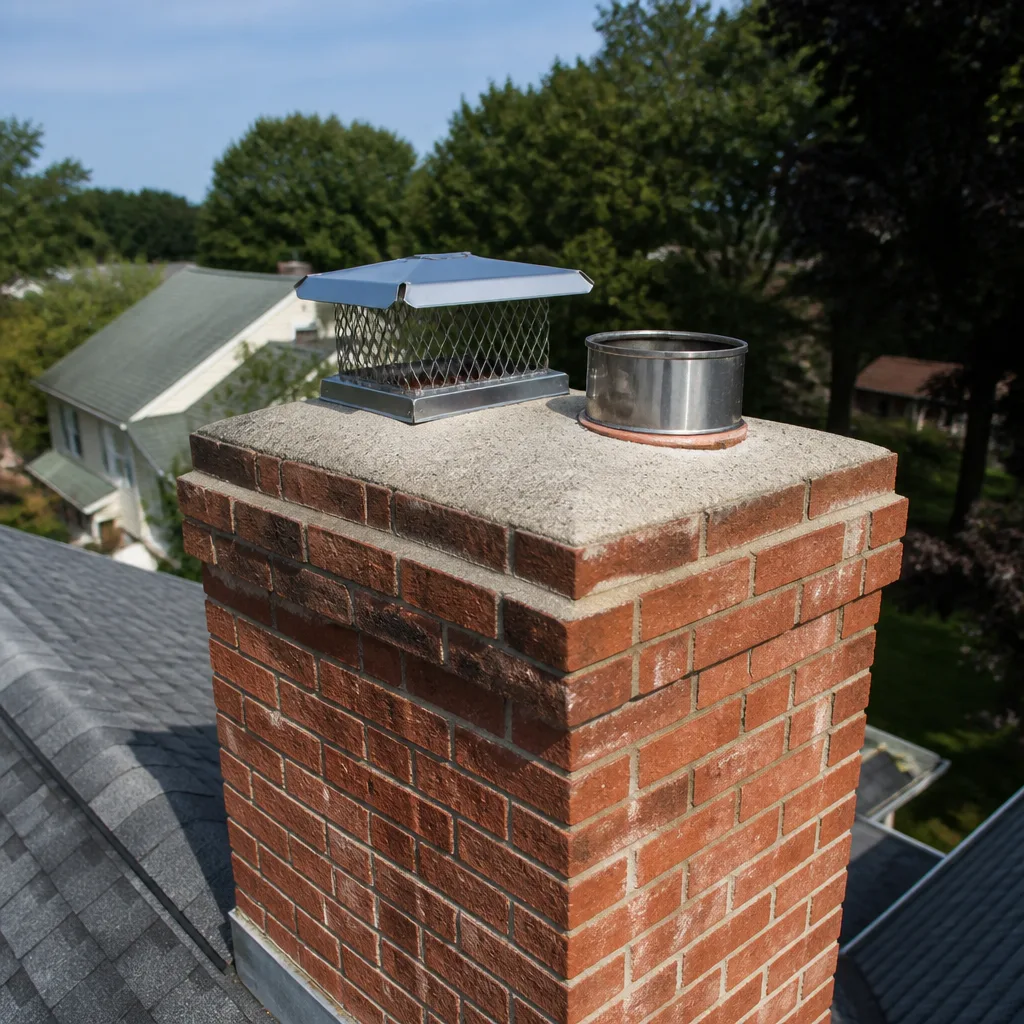
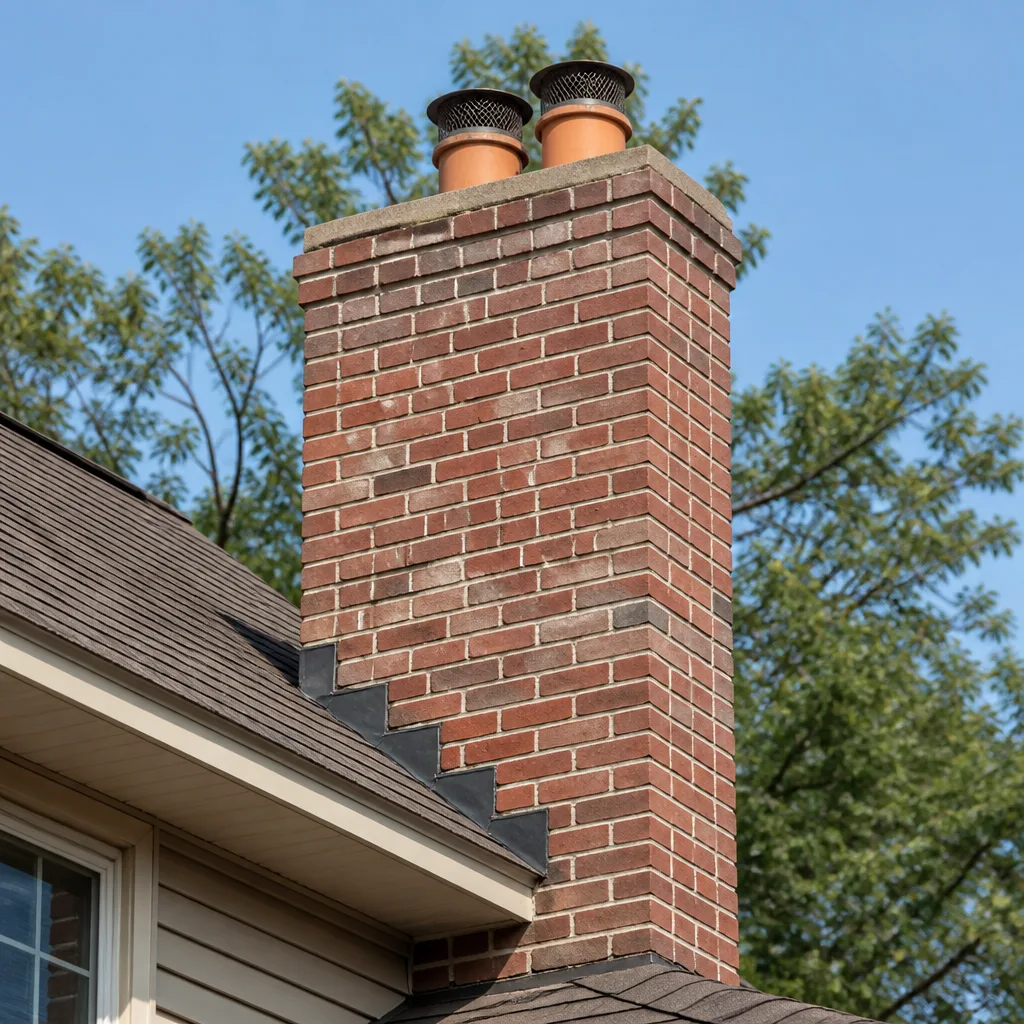
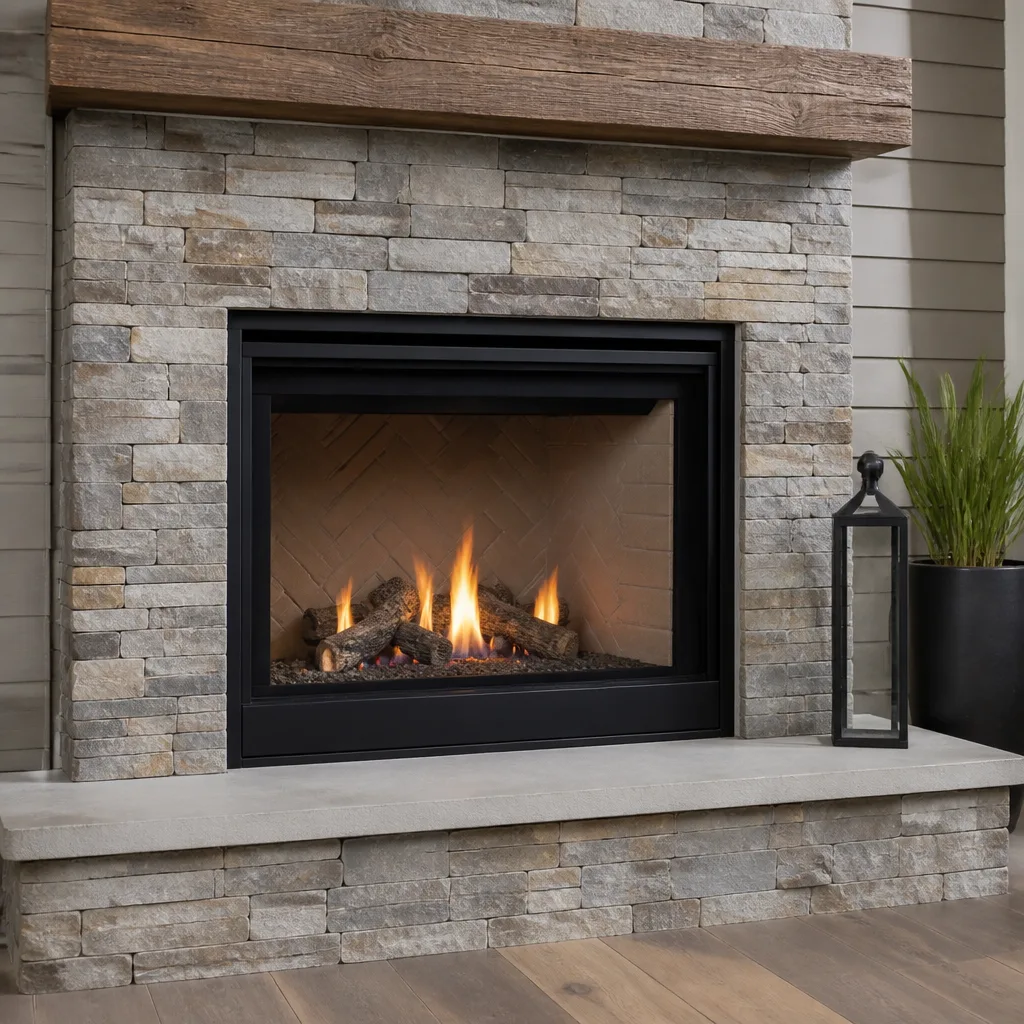
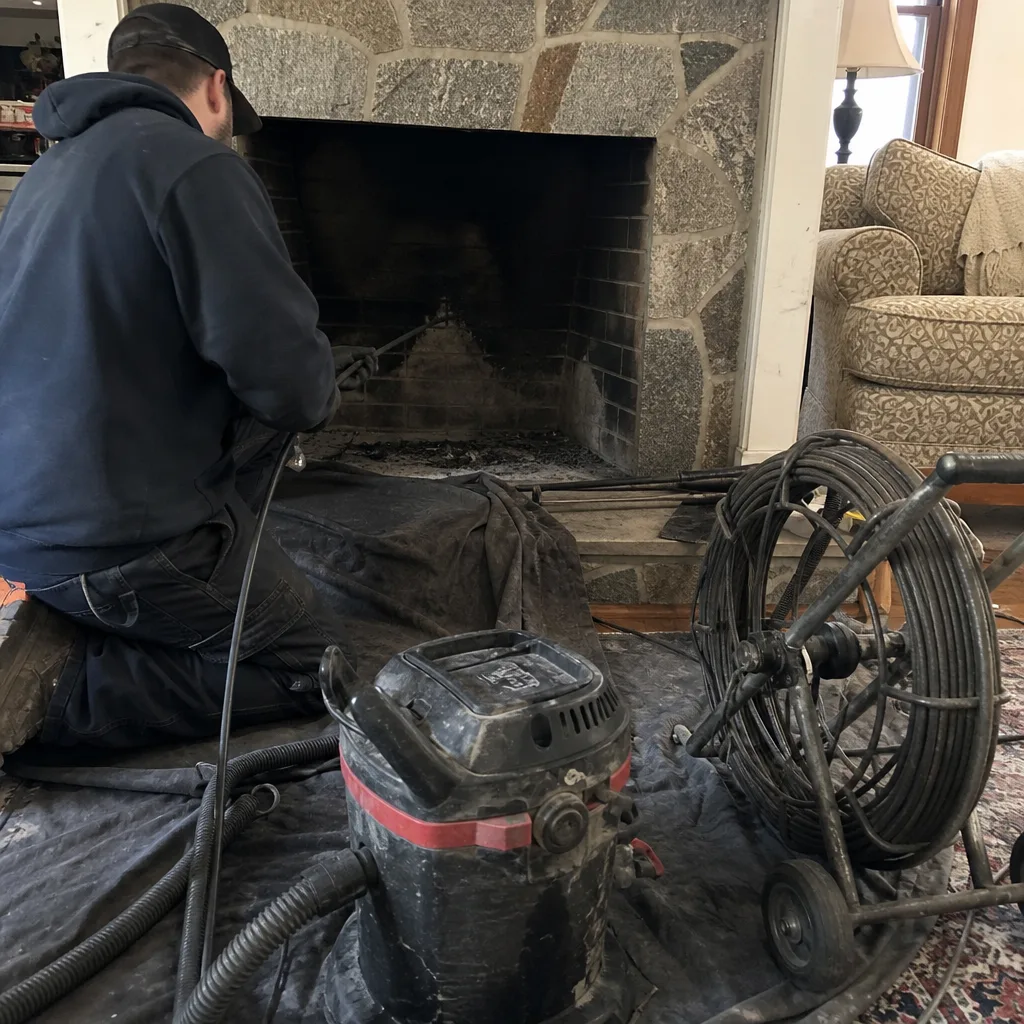 Before
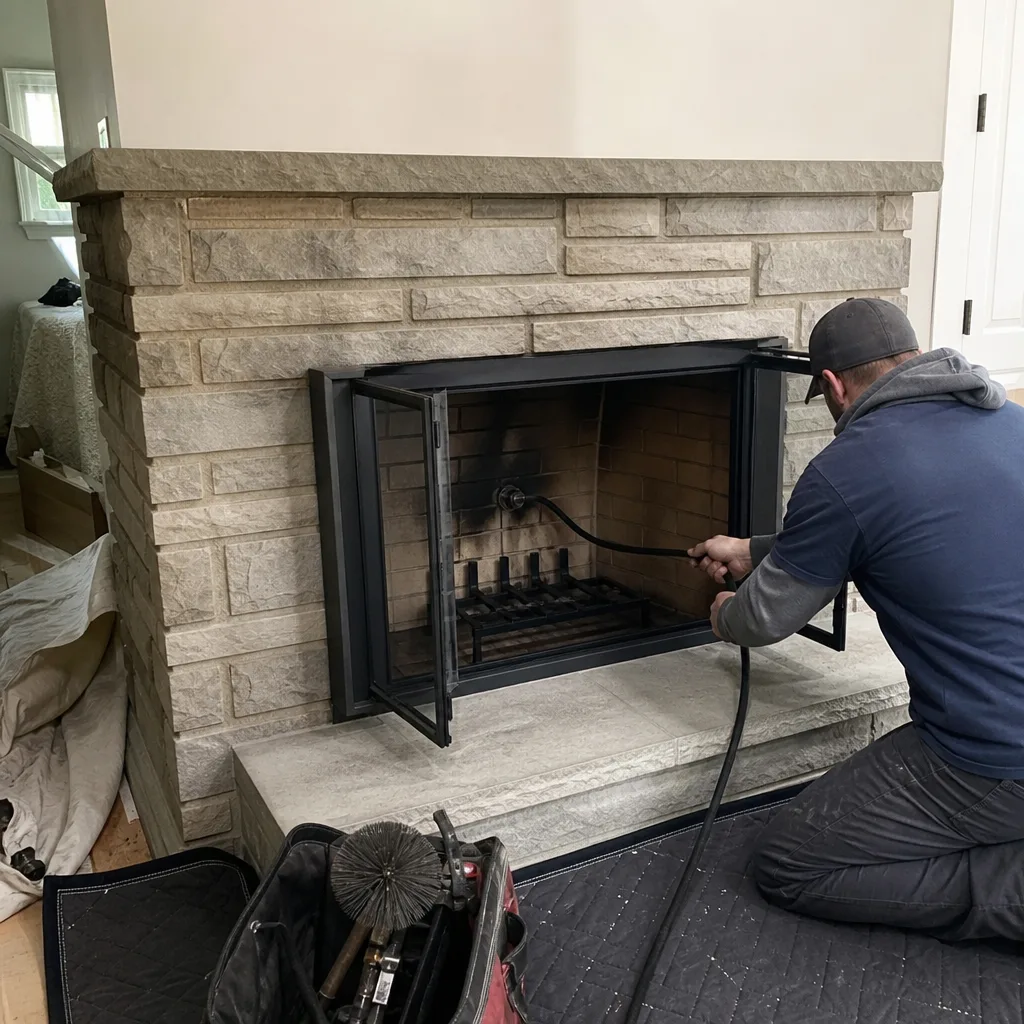 After
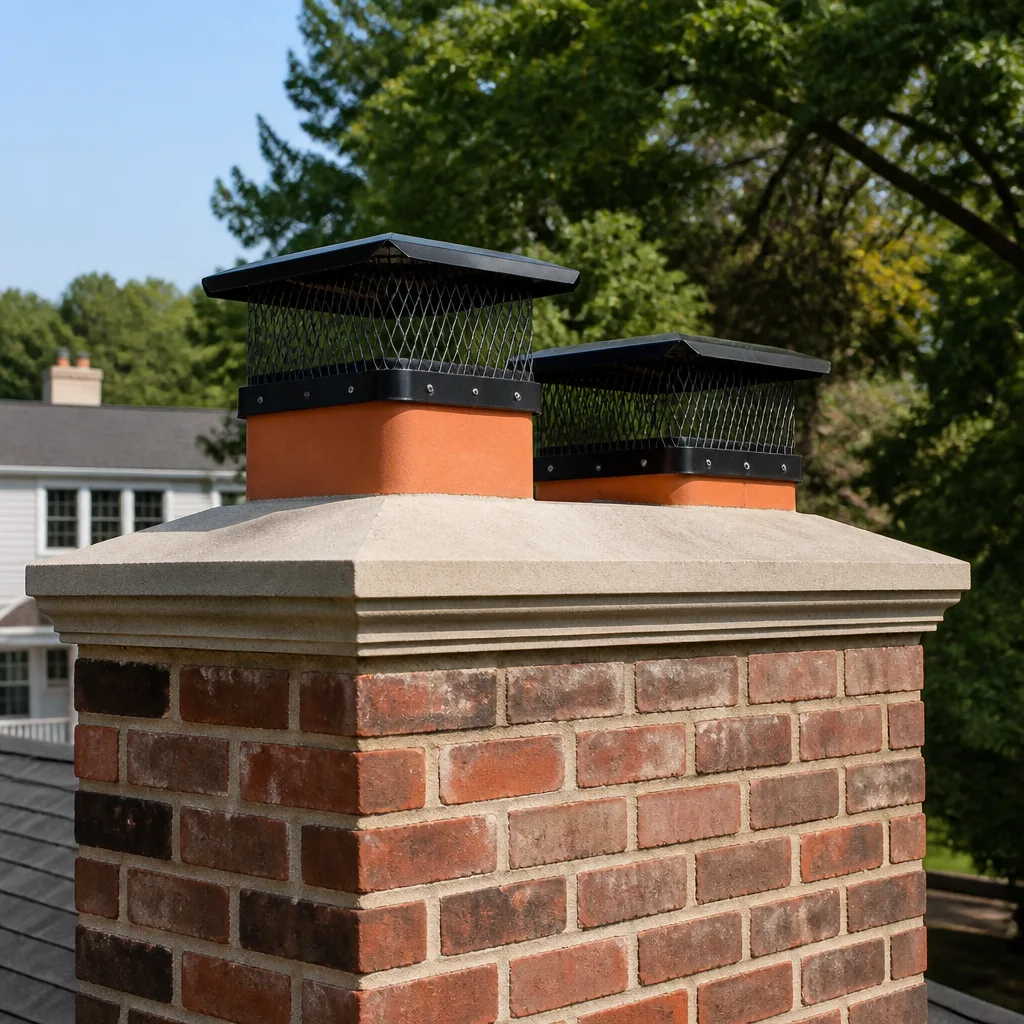
After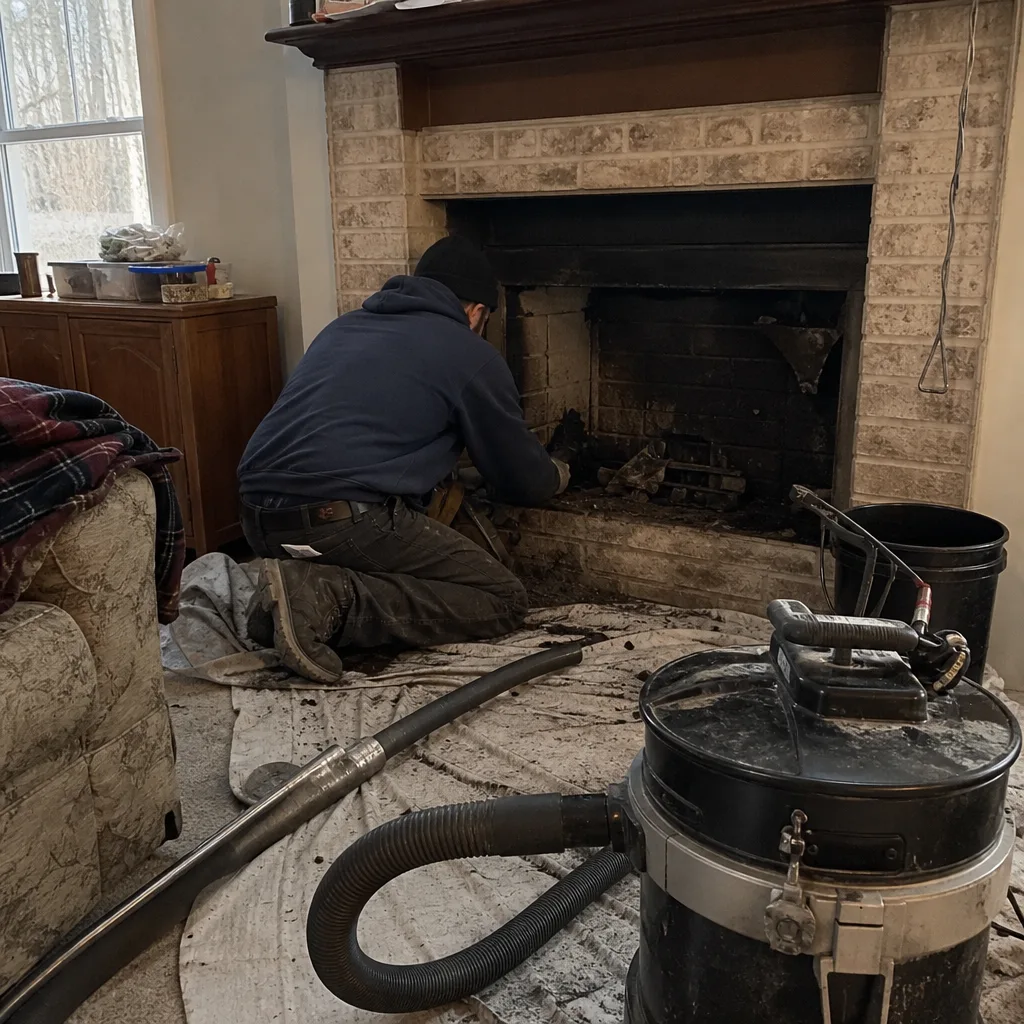 Before
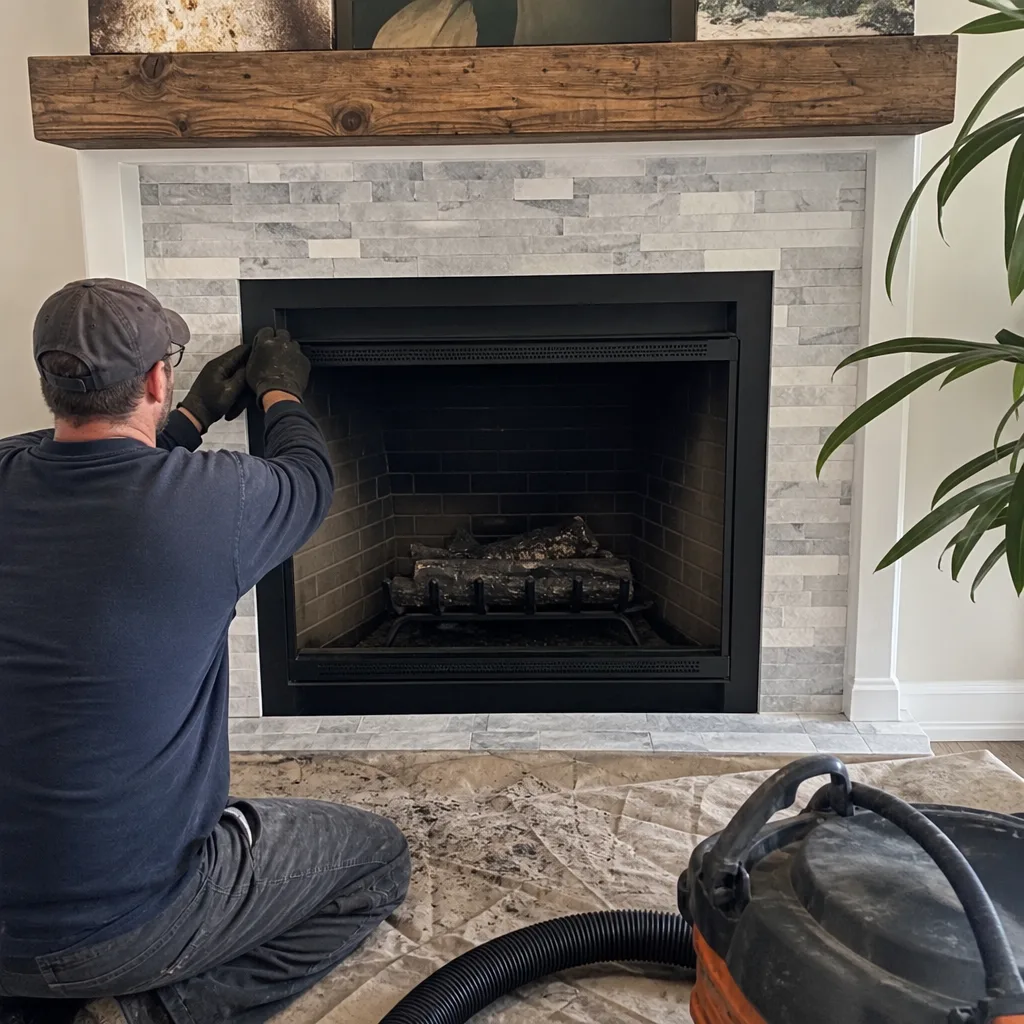 After
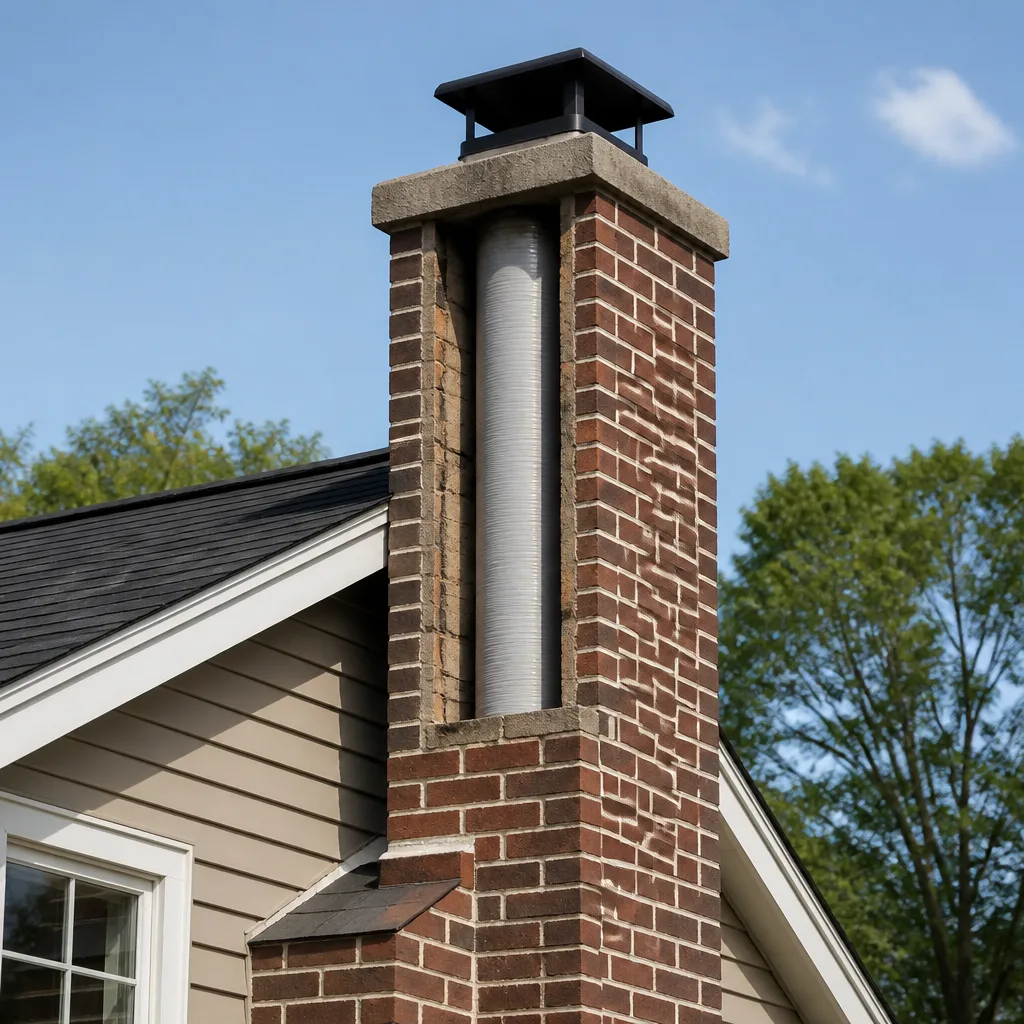
After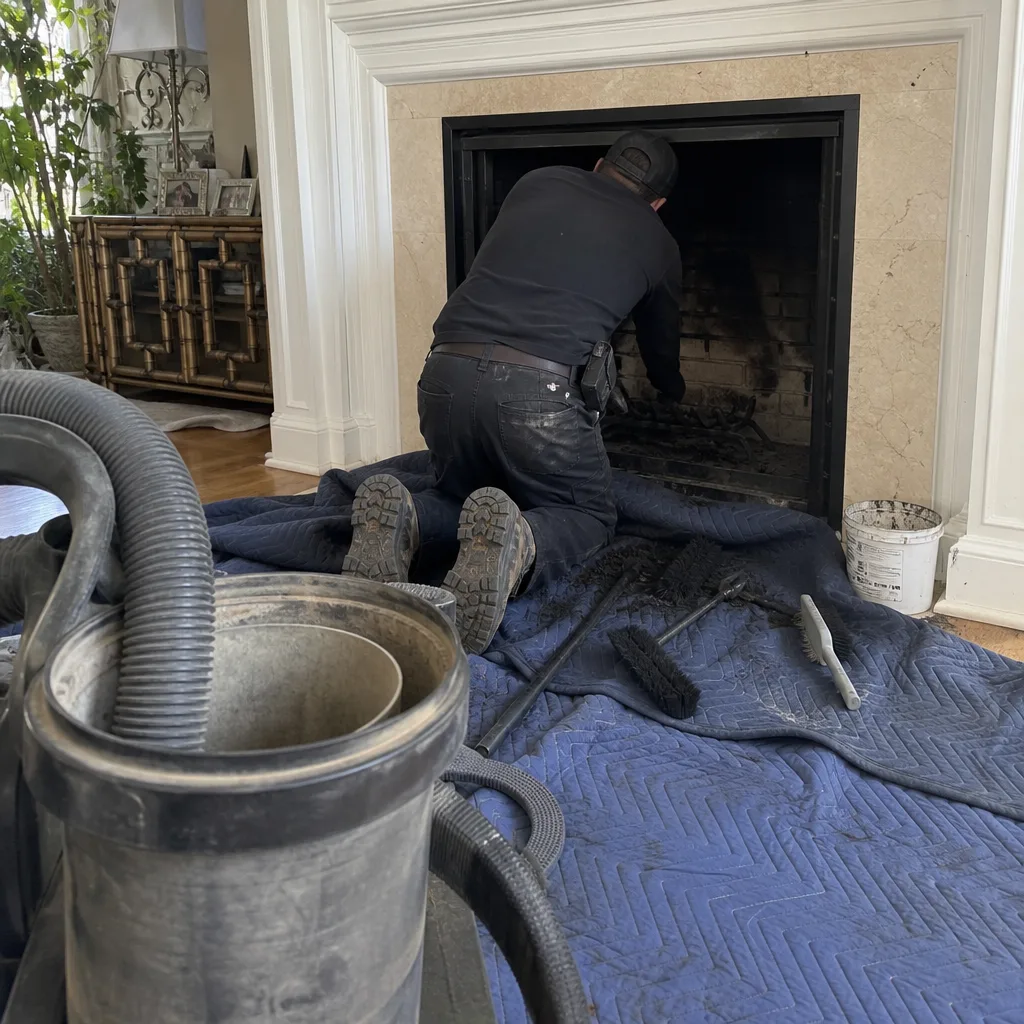 Before
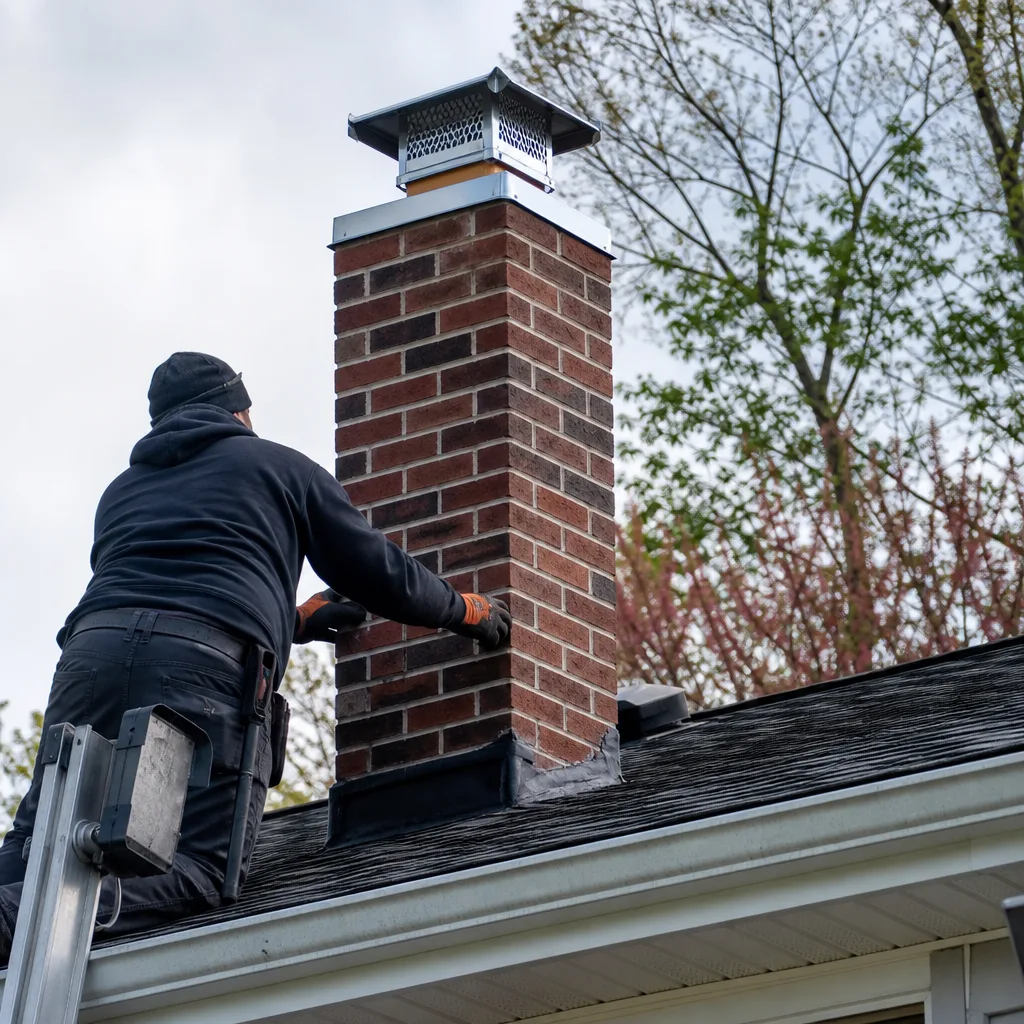 After
AfterChimney Cleaning Warning Signs: A Coventry Homeowner’s Reference Guide
A smoky smell in a room that isn’t the living room is one of the most reliable early indicators of a flue problem, and most Coventry homeowners assume it’s something else entirely for months before calling. We’ve been inside chimneys across Tolland County since 1999, and the pattern is always the same: by the time a homeowner picks up the phone, the chimney has been talking for a while. They just didn’t know the language. This guide translates it. You’ll learn which signs point to a routine sweep, which ones mean water is getting where it shouldn’t, and which ones mean you shouldn’t light another fire until a professional has looked.
Quick Answer
The most common chimney warning signs in Coventry are a smoky smell in rooms away from the fireplace, white staining on exterior brick, dark creosote flakes falling into the firebox, a fire that burns sluggishly or smokes back into the room, and a musty odor after rain. Most of these announce themselves weeks or months before they become dangerous. The trick is knowing which ones are a $200 sweep and which ones are a liner problem.
Table of Contents
- The Smell Index: What Your Nose Is Telling You
- Draft Problems That Don’t Feel Like Chimney Problems
- White Staining on Exterior Brick (Efflorescence)
- Cracking, Popping, and Settling: When Sounds Matter
- Visible Creosote: The Stuff You Can See
- Water Signs That Point to the Chimney, Not the Roof
- Which Signs Are ‘Schedule Within the Month’ vs. ‘Stop Burning Today’
- Common Mistakes to Avoid
- When to Call a Professional
- Frequently Asked Questions
- The Bottom Line
The Smell Index: What Your Nose Is Telling You
Your nose is the cheapest diagnostic tool you own, and it’s usually right. The problem is that most people can’t identify what they’re smelling, so they light a candle, open a window, and move on. Here’s the plain-English breakdown of what different chimney odors mean in a Coventry house.
Creosote odor: like a campfire that never went out. If you smell smoke days after the last fire, that’s creosote buildup in the flue. First-degree creosote is a brush job. Third-degree is a glaze, and it catches fire. This smell typically comes through the fireplace opening when the house is closed up tight, especially on humid summer days in Connecticut when the air pressure shifts. A sweep is in order, and soon.
Burning plastic or acrid chemical smell during a fire. Stop using the fireplace immediately. This isn’t creosote. It’s often a sign that something that shouldn’t be in the flue is in the flue: a bird nest, a squirrel’s stash of leaves and debris, or worse, a liner that’s degraded and is exposing surrounding materials to heat. This is a don’t-light-another-fire-until-it’s-checked situation.
Musty, damp odor, especially after rain. This points to water intrusion somewhere in the system. The chimney cap, crown, flashing, or brickwork is letting water in, and that water is soaking into creosote and masonry. A wet chimney smells like a wet basement for the same reason: moisture plus organic material equals must. Left alone, freeze-thaw cycles in Connecticut winters turn that moisture into cracked brick and spalling mortar.
Rotten egg or sulfur smell. If you have a gas fireplace or gas logs, this is a venting problem, not a chimney sweep problem. Gas appliances vent through the flue too. A sulfur smell means combustion gases aren’t leaving the house. Call someone today.
Here’s the short version, the way Wendell puts it when someone asks at the hardware store: creosote odor is a service call, burning plastic is an emergency, and musty dampness is water damage in progress. Your flue doesn’t care how the fire looks. It cares how it breathes.
Draft Problems That Don’t Feel Like Chimney Problems
A draft issue feels different depending on where you’re standing in the house, and most Coventry homeowners blame the wrong thing. They reseal windows, they call an HVAC company, they add weather stripping around doors. Then the problem persists because it was never the windows. It was the flue.
Here’s how to trace it. A proper draft pulls air up through the chimney and out. When the flue is restricted, that pull weakens, and the whole house feels it.
Cold air in the living room, even with the fire going. The fire is competing with a restricted flue for air. Instead of drawing combustion gases up and out, the fireplace is pulling air from the room itself and not moving it efficiently. The room stays cold because the fire isn’t drafting.
Doors that slam when the fire is lit. A strong, healthy draft creates a subtle pressure change in the house. When the flue is partially blocked, that pressure change becomes erratic. Air rushes toward the fireplace when the fire flares, then stalls. You feel it as drafts that come and go, doors that don’t behave, and a fire that surges and dies for no visible reason.
Smoke that hangs in the room when the fire is first lit. Cold air sits in the flue and blocks the draft until the chimney warms up. Some of this is normal in a cold Connecticut winter. But if it takes more than a minute or two for the smoke to start going up instead of out, you’ve got a chronic restriction: creosote buildup, a blocked spark arrestor, or a flue that’s too cold because it’s unlined or improperly sized.
The upstairs bedrooms smell like smoke when the downstairs fireplace is used. This is one of the most telling signs Wendell hears about. Smoke never reached the upstairs bedrooms on its own. It got there because the draft failed, and smoke found another path: through gaps in the flue, into wall cavities, and out through whatever opening it could find. That’s chimney smoke traveling through your house like it’s looking for an exit. It means the flue has a breach or a serious blockage.
The test is simple. Light a fire on a still day. If the smoke goes up cleanly within a minute, your draft is fine. If it hesitates, billows, or you smell smoke in other rooms, the flue is the problem, not your windows.
White Staining on Exterior Brick (Efflorescence)
That white, chalky powder on the outside of your chimney isn’t age. It’s efflorescence, and it means water is moving through the masonry. In Coventry, where winters freeze and thaw repeatedly between November and March, this is one of the most common and most ignored warning signs we see.
Efflorescence happens when water soaks into brick, dissolves the natural salts in the masonry, and then evaporates at the surface, leaving the salt behind. It looks like someone dusted the chimney with white powder. It’s not a cosmetic issue. It’s a record of water passing through your chimney, and every time that water freezes, it expands, and the brick cracks a little more.
Here’s what different presentations mean:
- White powder across the entire chimney face. The chimney is absorbing rain because the brick is unpainted, unsealed, and porous. This is common on older Coventry homes with original masonry. The fix is a breathable water repellent, not paint, and it’s a spring project, not an emergency.
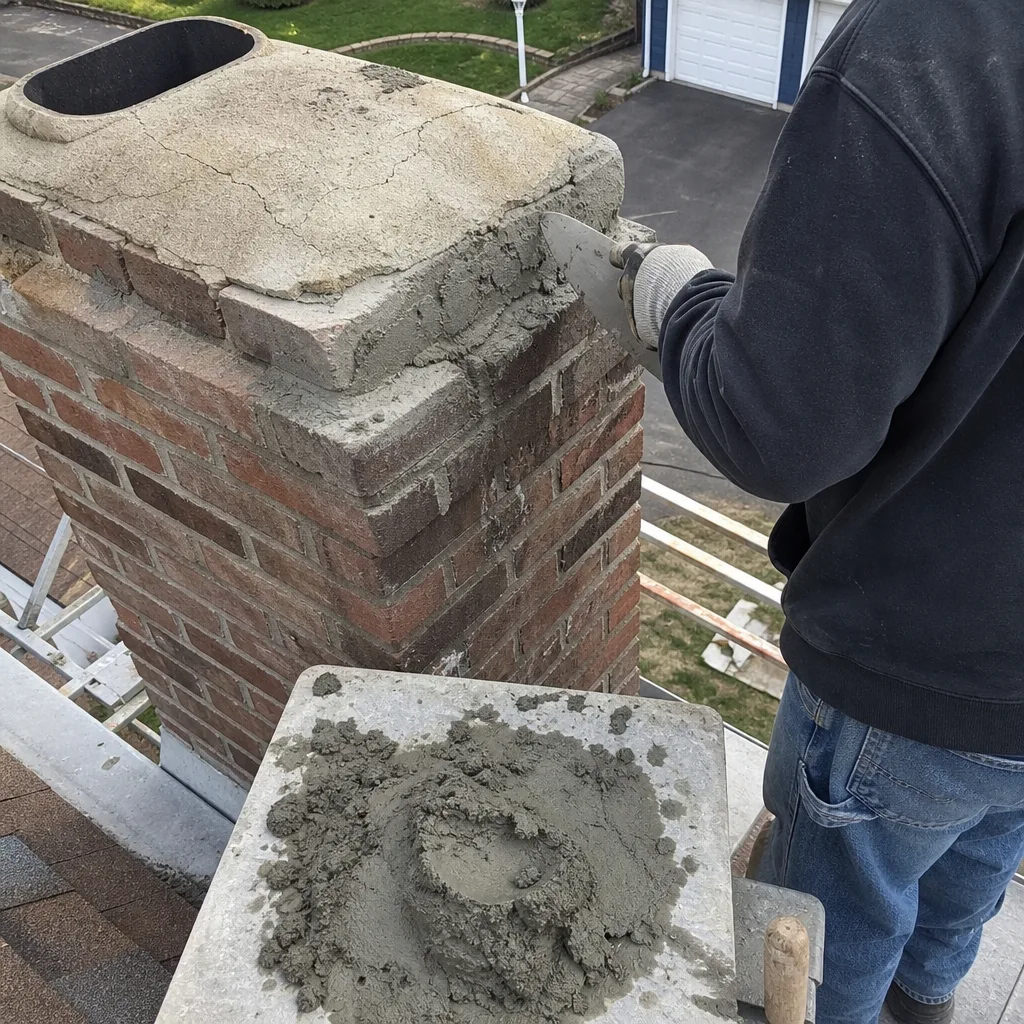
- White staining concentrated near the top. The chimney crown or cap is failing, and water is entering from above. The crown is the concrete slab at the very top. Cracks in it channel water directly into the chimney structure. This is a schedule-within-the-month issue.
- White staining in vertical streaks below the flashing. The flashing, the metal that seals the seam between chimney and roof, has failed. Water runs down the chimney and shows up as streaks on the brick below the roofline. This is roof-level work and it goes hand in hand with a chimney inspection.
- White staining on interior brick or the firebox walls. Water is getting in from above and working its way down the inside. This often appears alongside the musty smell. It’s a sign that the problem has been progressing for a while.
A quick note on Coventry specifically: our houses see a lot of weather. Snow sits on roofs for weeks, then melts, then freezes again. A chimney that absorbs water in December and freezes in January doesn’t show the damage until March or April. If you’re seeing efflorescence now, it started months ago. Ask anyone on your street with an older home, and chances are they’ve dealt with it or are ignoring it right now.
Cracking, Popping, and Settling: When Sounds Matter
Houses make noise. Coventry houses, especially older ones, creak and settle with temperature changes. But some sounds are the chimney talking, and the difference matters.
Normal settling sounds. A low creak or pop when the sun hits the roof, or when the heat kicks on and the framing adjusts. These are one-time events, they don’t repeat in rhythm, and they don’t get worse month to month. If the sound has been there for years and hasn’t changed, it’s probably framing, not masonry.
Pops that happen while the fire is burning. The firebox brick and flue liner are expanding with the heat. This is normal, especially in the first 10 to 15 minutes. What’s not normal is a pop followed by a small shower of grit or sand falling into the firebox. That’s mortar letting go.
Cracking sounds that repeat when the wind blows. A loose chimney cap or a damaged crown can make a sharp, metallic tick when wind moves it. If you hear it on windy days, look at the top of the chimney. The cap may be loose, or the crown may have a loose section that’s vibrating.
Crumbling sounds, like gravel sliding. This is the one that gets our attention. It’s the sound of mortar joints failing inside the flue. When mortar between flue tiles breaks down, pieces of it fall. This is a structural issue, and it’s beyond a sweep. Left alone, it progresses until the liner is compromised, and then you’re looking at a rebuild, not a repair.
The difference in plain terms. A settling house creaks and stops. A failing chimney pops, ticks with the wind, or drops things. If you hear something and the fire has been lit for an hour, look in the firebox. If you see grit or small pieces of material that weren’t there before, don’t light another fire until a camera inspection confirms what’s happening. We run a camera down every flue we work on, and the footage tells the story more clearly than any sound ever could.
Visible Creosote: The Stuff You Can See
Creosote is a byproduct of burning wood. Some is normal. The amount and the form it takes tells you whether you need a sweep or a serious conversation about your burning habits and your flue.
Creosote forms when wood smoke cools and condenses on the flue walls. The hotter and cleaner the burn, the less creosote. The colder the flue and the greener the wood, the more you get. First-degree creosote is a brush job. Third-degree is a glaze, and it catches fire.
Here’s what to look for:
- Black, flaky material that falls into the firebox. This is second-degree creosote. It’s brittle and falls in pieces when you open the damper or when the wind blows down the flue. It accumulates fast. A sweep will remove it in an hour or two.
- Shiny, tar-like glaze on the damper or visible flue walls. This is third-degree creosote. It’s dense, it’s flammable, and it doesn’t come off with a standard brush. This is the kind of creosote that fuels chimney fires. If you see this, schedule a sweep and have the flue inspected. Some cases require chemical treatment or a reline.
- A black, oily film on the glass doors of your fireplace. It means the fire is burning cool and creosote is condensing in the firebox as well as the flue. It’s an early warning. Adjust your burning habits and get a sweep.
- Creosote smell in the house when the fireplace hasn’t been used in days. Already covered in the smell section, but it’s worth repeating: this is the most common sign we hear about. The creosote is there, and it’s off-gassing into the house.
The honest guidance here is that once a year, burn or no burn, is the right interval for most Coventry fireplaces. Chimneys break in the off-season too. If you burn three cords or more a winter, you may need a mid-season sweep. If you see any of the visible signs above, the clock is running faster than the calendar.
Water Signs That Point to the Chimney, Not the Roof
When water shows up on the ceiling or the wall near the fireplace, most people call a roofer. Sometimes it is the roof. But a lot of the time, in our experience, the water is coming through the chimney system, and the roof is dry. Here’s how to tell the difference.
A water stain on the ceiling near the chimney, not under a valley or a flat roof section. If the stain starts at the chimney and spreads outward, or if it’s concentrated right where the chimney passes through the ceiling, the water is traveling down the chimney chase or the masonry and entering at a penetration point. Roofers often miss this because they’re looking at the shingles. The chimney is the path.
Water in the firebox after a hard rain. This is direct water entry from above: a failed crown, a missing or damaged cap, or no cap at all. The fix is usually a new chimney cap and crown repair. Chimney Cap & Crown in Coventry work is one of the most common repairs we do, and it’s often the difference between a chimney that lasts another 30 years and one that needs a rebuild in five.
Dark staining on interior walls around the fireplace, especially after freeze-thaw cycles. This is water that has penetrated the brick and is now moving into the wall cavity. It often appears in late winter or early spring in Coventry, when the snow melts and the chimney is saturated. The freeze-thaw process has likely already caused spalling, which is the flaking off of brick faces. The Top Hat Chimney home team sees this pattern every March and April.
Rust on the damper or fireplace tools. Moisture is getting into the flue. It may not be enough to cause visible staining yet, but it’s enough to rust metal. The source is almost always a missing or inadequate cap, or a crown that’s cracked. Chimney Liner & Rebuild in Coventry is the deeper conversation if the moisture has been there for years: the liner may be corroded or the flue tiles may be spalling from the inside.
Water is patient. It doesn’t announce itself. By the time you see the stain, it’s been working for months. The fix when you catch it early is a few hundred dollars. The fix when you don’t is a rebuild. That’s not a scare tactic. That’s the math of masonry in a Connecticut climate.
Which Signs Are ‘Schedule Within the Month’ vs. ‘Stop Burning Today’
Not every chimney warning sign is an emergency. Some are, and some can wait a few weeks. Here’s the honest guide Wendell gives when someone describes their symptoms over the phone.
Schedule within the month:
- Creosote odor in the house, but no smoke visible. The flue is dirty and needs a sweep. You can finish the season or stop burning until it’s done, but you don’t need to panic. Just call and get on the schedule.
- Efflorescence on exterior brick. Water is moving, and it needs to be addressed, but the damage compounds over seasons, not days. Spring in Coventry is the ideal time to seal masonry.
- Rust on the damper or tools. Moisture is getting in, and it will worsen. But it’s not a safety emergency unless you’re seeing water in the firebox after rain.
- Smoke that takes more than a minute to draft when you light a fire. A restricted flue is a performance issue at this stage. It becomes a safety issue if it worsens.
- Grit or sand falling into the firebox. Mortar is degrading. This is a structural early warning. Book the inspection and stop burning until the camera confirms what’s happening.
Stop burning today and call before the next fire:
- Burning plastic or acrid chemical smell during a fire. Something is in the flue that shouldn’t be, or the liner is failing. This is a fire hazard.
- Smoke filling the room and not drafting after several minutes. The flue is blocked or the draft is reversed. Carbon monoxide risk.
- Visible flames or glowing in the flue while the fire is burning. This is a chimney fire in progress. Get everyone out if it’s active, call the fire department, and once it’s contained, have the flue inspected before another fire.
- Water pouring into the firebox during rain. The cap and crown have failed completely. Every rain event is doing more damage.
- A sulfur or gas smell with a gas fireplace. Combustion gases are not venting. Carbon monoxide is colorless and odorless, but the sulfur additive is your warning.
The dividing line is simple: if the issue involves smoke, fire, or gas, act today. If it involves creosote buildup, water staining, or draft performance, you have time to schedule. But don’t wait until fall. Every chimney company in Coventry is booked solid by October, and the problems that could have been $200 sweeps in May become $2,000 repairs in December.
Common Mistakes to Avoid
- Blaming the windows for a draft. In Coventry, old houses get weather-stripped and resealed every year, and the draft continues. If smoke takes longer than a minute to draft, the flue is restricted. Windows are rarely the culprit when the fire is lit.
- Painting over efflorescence. Paint traps moisture inside the brick and accelerates spalling. The fix is addressing the water source and using a breathable sealant. Paint is a temporary visual fix that makes the structural problem worse.
- Using the fireplace as a primary heat source without mid-season sweeps. Burning four or more cords through a Connecticut winter without a sweep means creosote is building faster than a standard annual cleaning can address.
- Skipping the camera inspection. You can’t see what’s happening 20 feet up the flue from the firebox. A sweep without a camera is a guess. The camera footage and a plain-English verdict, every time, is the standard to insist on.
- Waiting until fall to call. Chimney companies book weeks out from September through December. The time to address a spring or summer warning sign is spring or summer, when crews are available and pricing is predictable.
- Assuming a gas fireplace doesn’t need the chimney checked. Gas fireplaces still vent through the flue, and they still get blocked, corroded, and damaged. They also produce water vapor that can damage older flue tiles faster than wood smoke does.
- Ignoring a small amount of white staining because it’s been there for years. Efflorescence that persists means water is still moving. Years of water movement in Coventry freeze-thaw cycles means structural damage is accumulating. The chimney isn’t aging gracefully. It’s failing.
When to Call a Professional
Call when you can’t explain the smell. Call when you see water where water shouldn’t be. Call when the fire doesn’t draft and you’ve tried opening a window and priming the flue. Call when you see grit in the firebox, cracking sounds that repeat, or white staining on brick. None of these are do-it-yourself situations. A chimney sweep is a professional trade, and the stakes are fire and carbon monoxide. Wendell Pike has been climbing onto Coventry roofs and running cameras down flues since 1999, and he’ll tell you plainly whether you need a sweep, a repair, or nothing at all. Top Hat Chimney offers free estimates in Coventry. Call (860) 743-7732 and a live person answers. It may well be Wendell himself.
Frequently Asked Questions
A standard chimney sweep in Coventry typically runs between $180 and $340, depending on the flue’s condition, accessibility, and whether you need a cap inspection or a camera assessment. Top Hat Chimney gives upfront pricing before any work begins, and the number you hear on the phone is the number on the invoice. Call (860) 743-7732 for an exact quote. Estimates are free, and there’s no trip charge inside our service county.
Once a year, burn or no burn. Chimneys break in the off-season too, and Coventry’s humid summers and freeze-thaw winters take their toll whether you’re burning or not. Homeowners who burn more than three cords a season, or who burn green or unseasoned wood, may need a mid-season sweep. If you smell creosote when the fireplace hasn’t been used, the clock is running faster than the calendar.
Ask for the camera footage. A damaged liner shows up clearly on camera: cracked flue tiles, gaps where mortar has failed, or corrosion on a metal liner. We don’t recommend a liner replacement without camera evidence you can see for yourself. Chimney Liner & Rebuild in Coventry work is real and necessary when the flue is compromised, but the honest answer is sometimes a repair will do. We’ll show you the footage and tell you plainly. Free second opinions on any written estimate are always available.
Creosote accumulates, and creosote is flammable. A dirty flue is the primary cause of chimney fires, and chimney fires crack flue tiles and damage mortar joints even when they don’t burn the house down. Water damage progresses too: a cracked crown or missing cap lets water in, and in Coventry’s freeze-thaw climate, that water turns into cracked brick and spalling mortar. Skipping cleaning turns a $200 maintenance visit into a $3,000 rebuild every time, given enough years.
Humid summer air moves through the flue and activates creosote deposits, pushing the odor back down into the house. It’s common in Coventry in July and August when the air is heavy. It means there’s enough creosote in the flue to be worth addressing, even if you haven’t burned in months. A sweep in summer is often cheaper and faster to schedule than waiting for fall.
You can inspect the firebox, the damper, and the exterior brick from the ground. You should look for flaking creosote, grit in the firebox, white staining on exterior brick, and rust. What you can’t do is see the upper flue, the cap and crown from above, or the interior flue walls. That takes a ladder, a rooftop inspection, and a camera. That’s what we do. The camera footage and a plain-English verdict, every time, no exceptions.
The Bottom Line
Most chimney problems in Coventry announce themselves weeks or months before they become dangerous. A smoky smell in a room that isn’t the living room. White staining on exterior brick that isn’t age. Grit in the firebox that wasn’t there last year. A fire that doesn’t draft when it used to draft fine. These signs don’t look like chimney problems to most homeowners, but they are, and the fix is almost always cheaper the day you notice than the year after you don’t. Learn the language. Trust your nose. And when something seems off, call someone who’ll tell you the truth, whether that means a sweep or an honest “you don’t need anything yet.” Top Hat Chimney is the Chimney Cleaning & Sweep in Coventry company that’s been doing this since 1999. Call (860) 743-7732.
Written by Wendell Pike, Owner at Top Hat Chimney, serving Coventry since 1999.