
Last updated September 10, 2026
Level 1 sweep and inspection to the NFPA 211 annual standard - flue, crown, cap, and flashing checked and photographed
Chimney sweep logs do not sweep chimneys. They loosen some creosote - which then falls where a brush and vacuum still have to collect it.
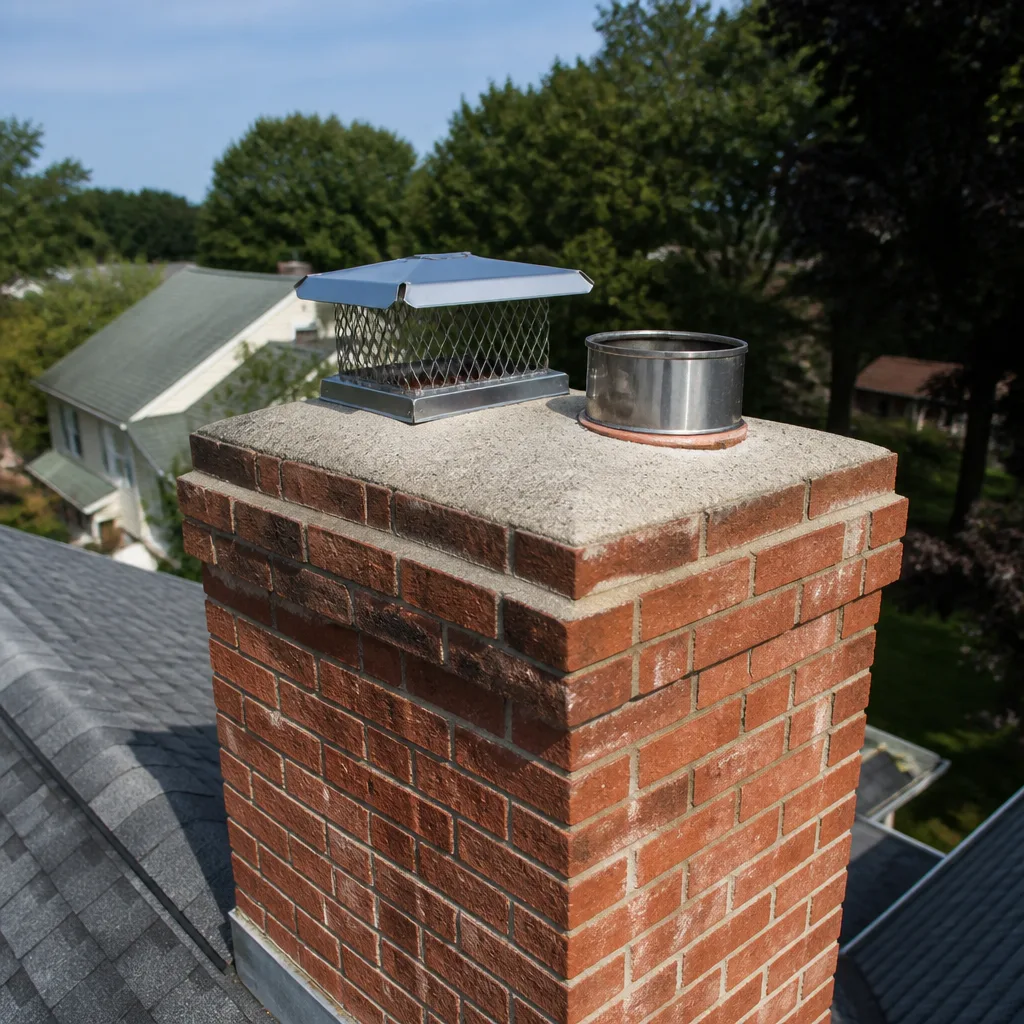
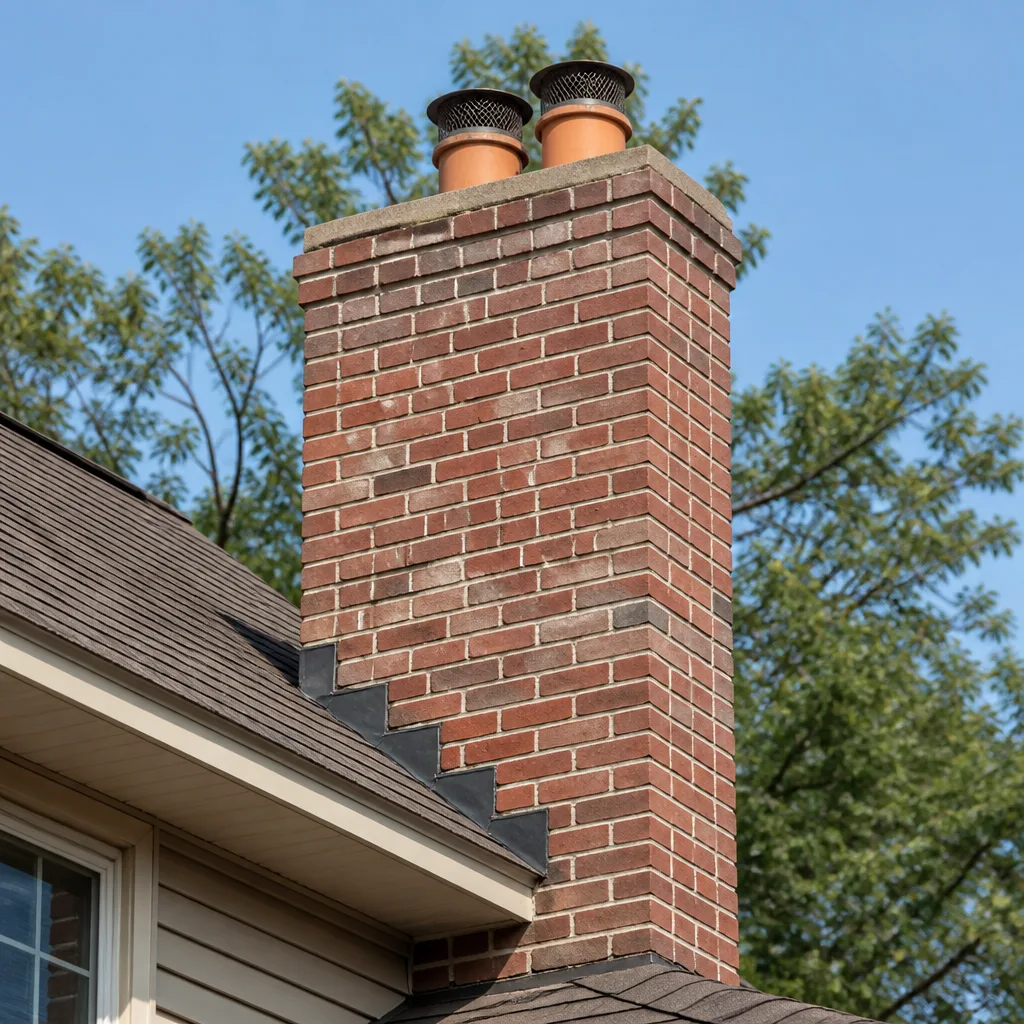
 Before
 After
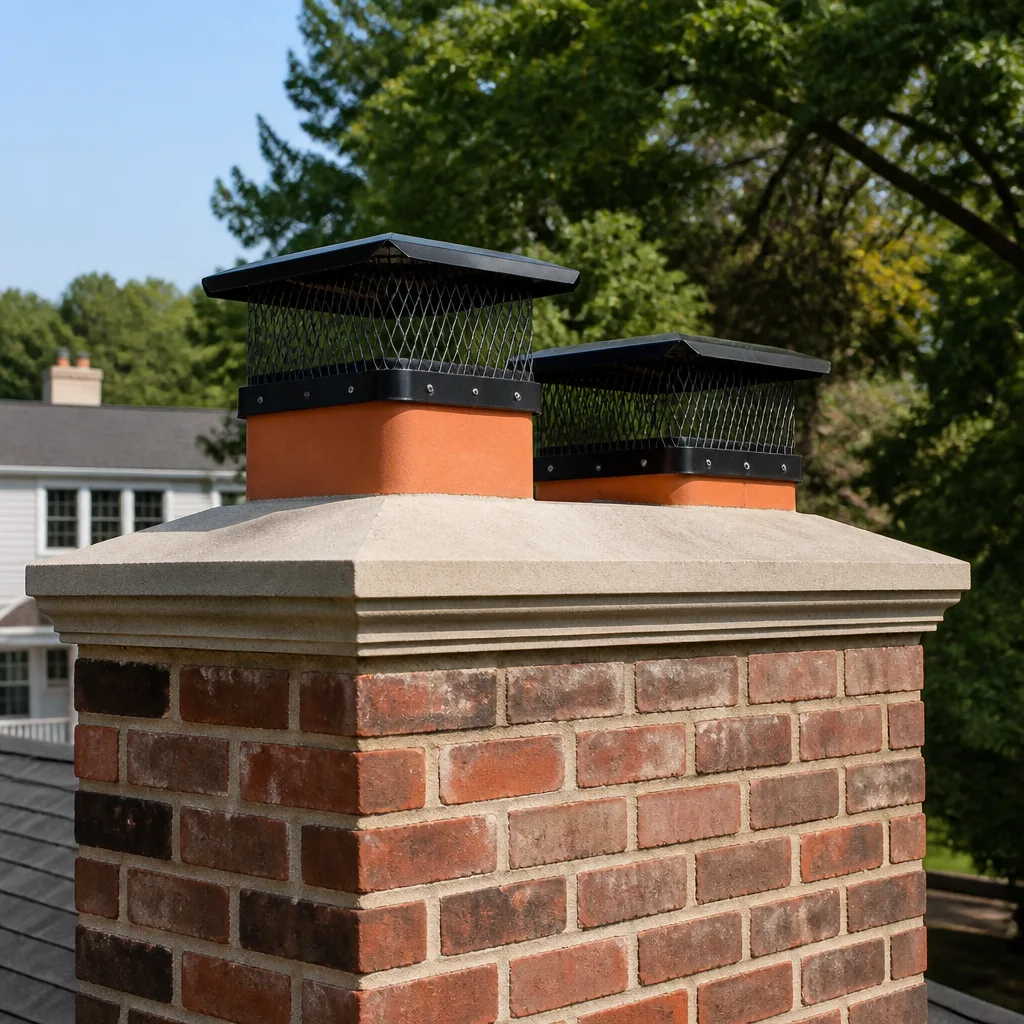
After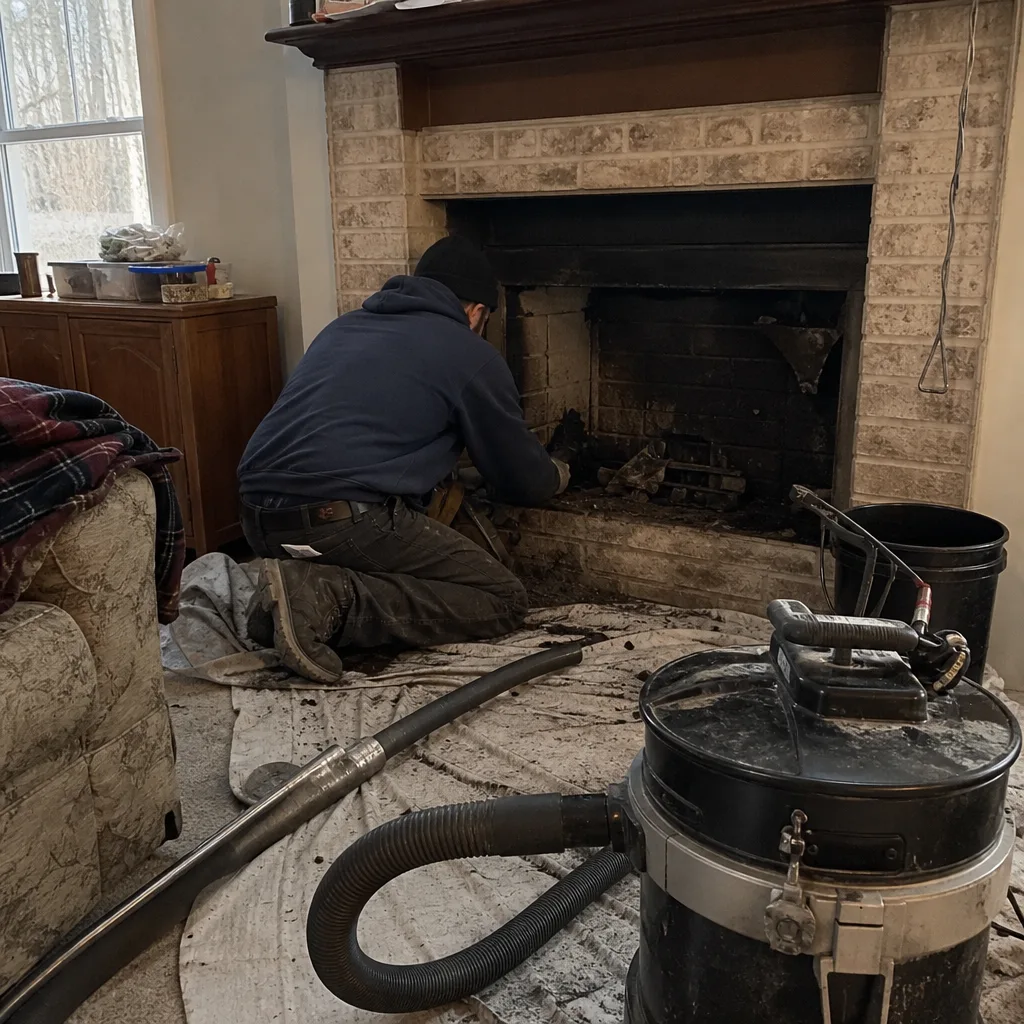 Before
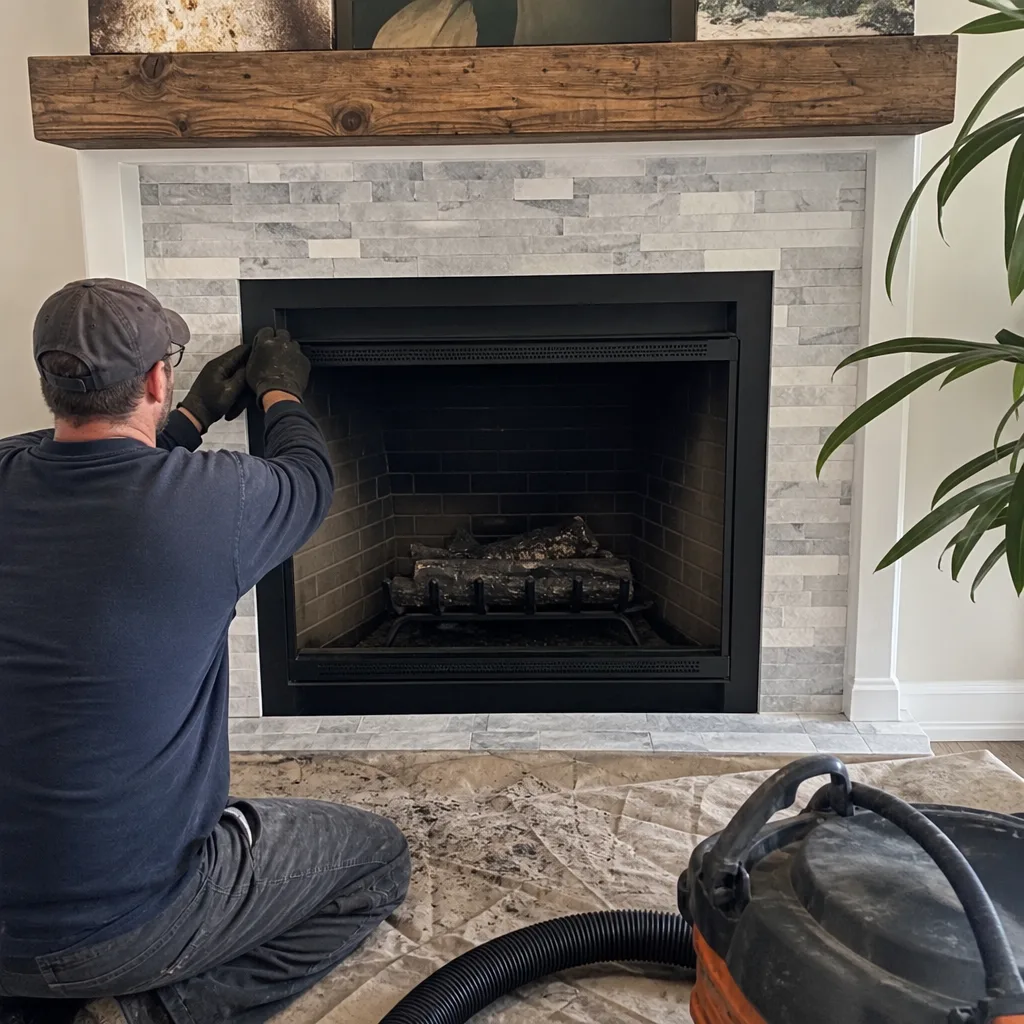 After
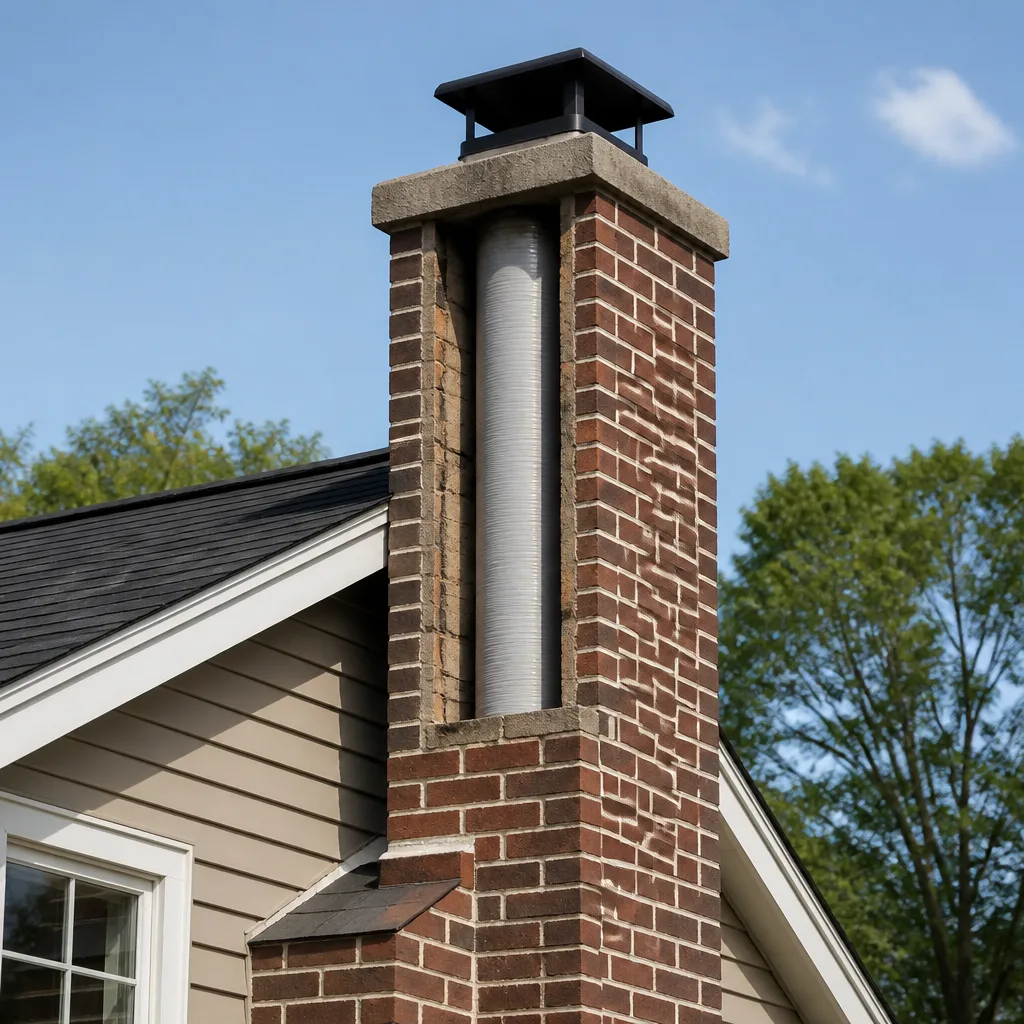
After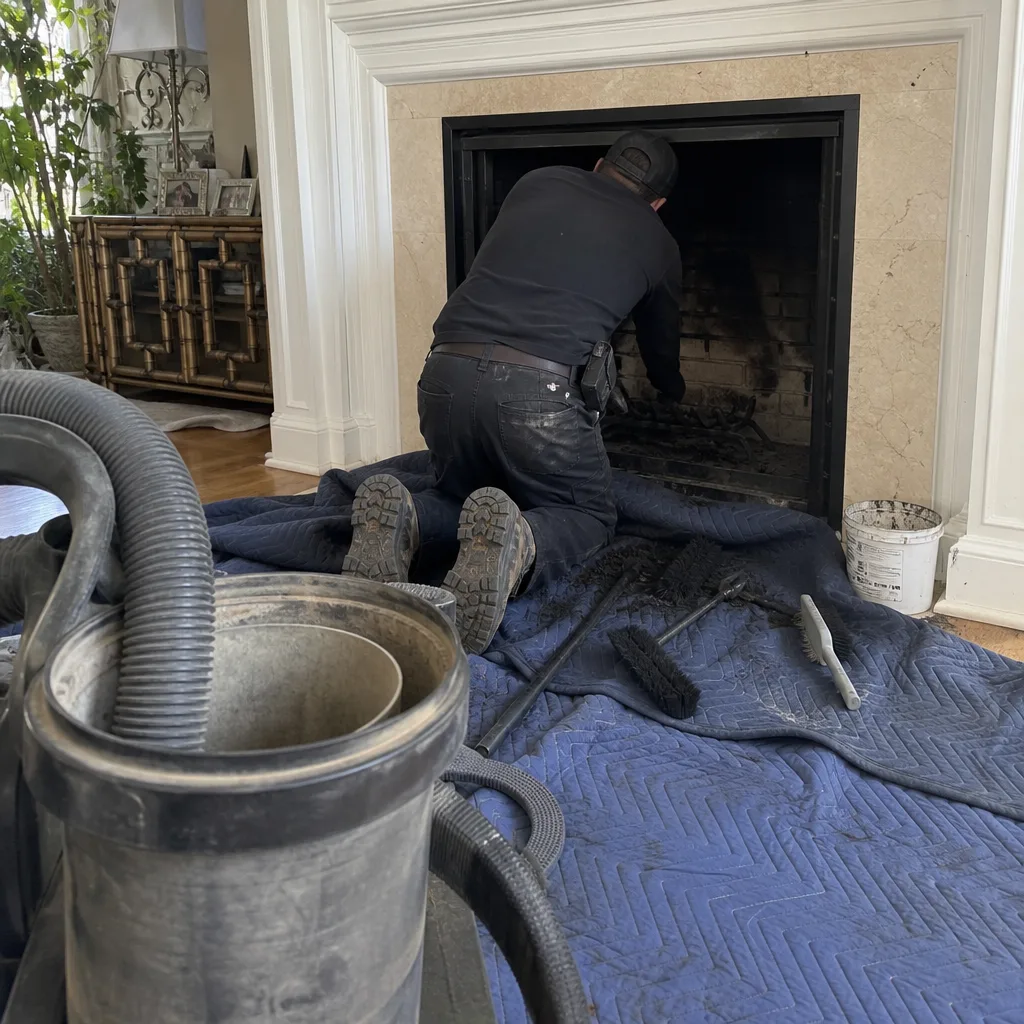 Before
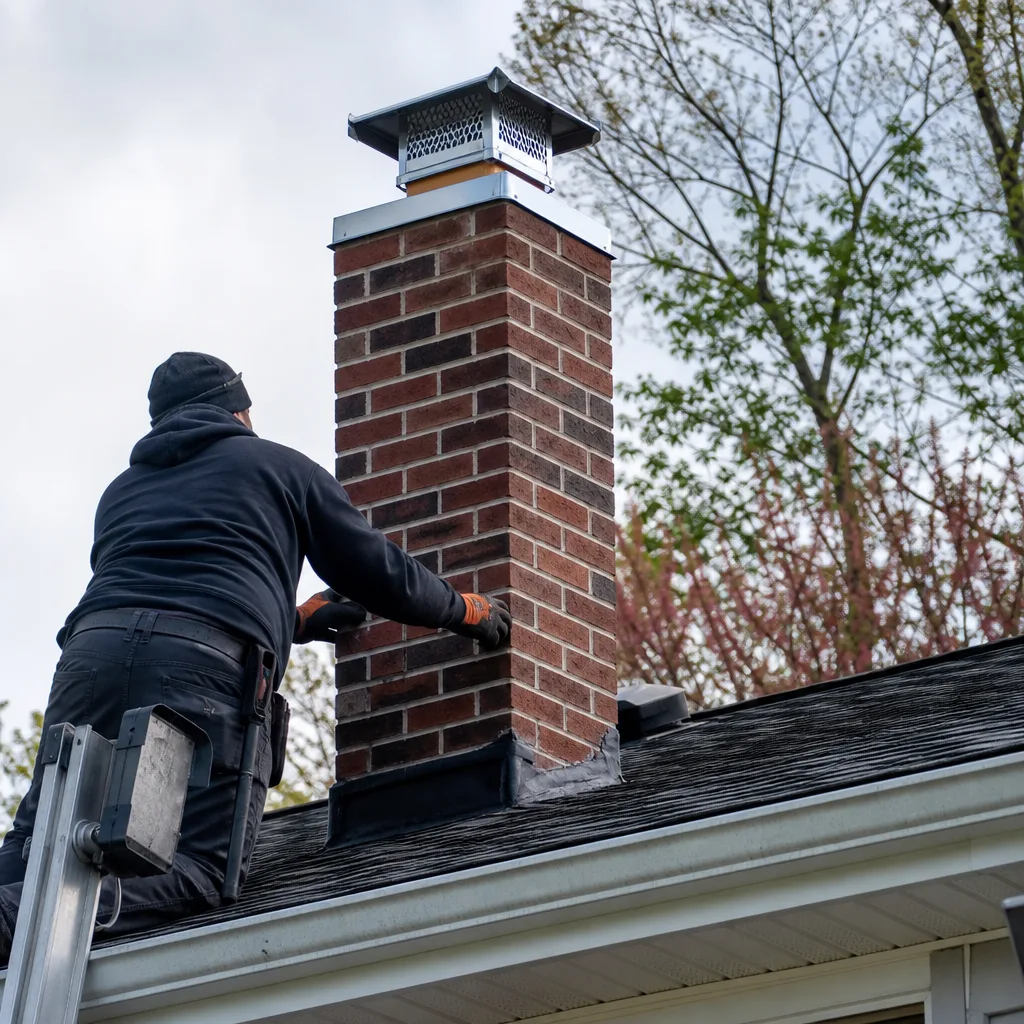 After
AfterDIY vs Professional Chimney Cleaning: The Coventry Homeowner’s Decision Guide
The chimney brush kits at the hardware store work fine for what they’re designed for, and that covers maybe 30% of what people try to use them on. We know because we get called out to Coventry homes after the kit has already been through the flue, and sometimes the homeowner has done a fine job, and sometimes the brush is still stuck up there and the living room smells like a campfire. This guide walks through the specific situations where cleaning your own chimney is genuinely reasonable, what you can’t see from the roof or the hearth, and the handful of mistakes that turn a $60 DIY job into a $1,200 repair. For how to hire a chimney cleaning contractor in Coventry: a step-by-step guide, see our companion post.
Quick Answer
DIY chimney cleaning in Coventry is reasonable only for a short, straight single-wall stove pipe with light ash and powder creosote and an accessible clean-out, when no inspection is needed for insurance or a real estate transaction. Anything involving a masonry chimney, a clay tile liner, an open fireplace, a roof you’d rather not climb, or glaze creosote should be handled by a professional with a camera and a rotary system, because the inspection is the part that actually protects the house and it cannot be self-certified.
Table of Contents
- What DIY Actually Covers (and What It Doesn’t)
- The Honest Checklist: Do You Qualify for DIY?
- The Inspection Gap: What the Brush Can’t Tell You
- The Equipment Reality: What We Bring vs. What You Can Buy
- Mistakes That Turn a $60 Job Into a $1,200 Repair
- How to Know If You Did the DIY Job Right
- Why Coventry’s Climate Makes This a Year-Round Question
- Common Mistakes to Avoid
- When to Call a Professional
- Frequently Asked Questions
- The Bottom Line
What DIY Actually Covers (and What It Doesn’t)
A chimney brush kit does one thing: it scrubs the inside of a pipe. That’s it. If you have a wood stove with a single-wall connector pipe running straight up into a thimble, and that pipe is maybe six feet long with no bends, and you can get to the clean-out cap without standing on a ladder, then yes, you can brush that pipe yourself and do a perfectly acceptable job. The creosote in that pipe is going to be first-degree or light second-degree: flaky, dusty, maybe a little crusty, and it will fall into the clean-out when you brush it.
What the kit doesn’t do is tell you whether the pipe is still safe. It doesn’t show you the inside of the thimble where the pipe passes through the wall. It doesn’t tell you whether the flue tile above that thimble is cracked, or whether the mortar joints have opened up, or whether there’s a nest in the smoke chamber. In Coventry, where houses range from 1800s colonials with original masonry to 1980s ranch homes with prefab fireplaces, the chimney itself is doing as much of the work as the pipe, and the brush only reaches the pipe.
So the honest split is this: DIY is reasonable for the connector pipe, and almost never reasonable for the flue itself. The flue is where the fire hazard lives, and it’s the part you can’t see from the hearth with a flashlight.
The Honest Checklist: Do You Qualify for DIY?
Before you buy the brush kit, run through this list. If you answer no to any of the first four questions, stop and call someone. If you answer yes to all of them, DIY is a defensible choice.
- Is the pipe single-wall and straight? Double-wall insulated pipe should not be brushed with a hardware-store kit. It has an inner liner that can be scored. Bends trap creosote and make brushing ineffective. Straight single-wall only.
- Can you reach the clean-out without a ladder or roof access? If you have to get on the roof to clean the chimney from the top, that’s not a DIY job. Roof falls from chimney work are a leading cause of homeowner injury, and a steep Connecticut roof in November is not the place to learn.
- Is the buildup light and powdery? Shine a flashlight up the pipe from the clean-out. If what you see is flat black dust or thin flaky crust, that’s first-degree creosote. A brush handles that. If you see shiny, tar-like glaze, that’s third-degree, and it will not come off with a brush. It requires a rotary system with chains or a chemical treatment and a professional.
- Do you need this chimney inspected this year? If you’re buying or selling a house, filing an insurance claim, or if there was a chimney fire you know about, the insurance company will want a written inspection from a qualified sweep. A homeowner cannot self-certify an inspection. That’s not a matter of skill. It’s a matter of liability and documentation.
- Is the pipe accessible without moving the stove? If the connector pipe runs behind the stove and you can’t pull it apart, you can’t brush it properly. Some Vermont Castings and Jotul stoves in older Coventry homes have rear-exit flue connections that practically require disassembly of the stove. Not a Saturday afternoon job.
The Inspection Gap: What the Brush Can’t Tell You
Here’s the thing most DIY guides skip: cleaning and inspection are two separate services, and the inspection is the one your insurance company actually cares about. When we do a chimney cleaning and sweep in Coventry, the brush work is maybe a third of the job. The rest is running a camera up the flue, checking the smoke chamber, examining the crown, looking at the flashing, and testing the damper. That’s the part that finds a cracked flue tile before it finds a wall fire.
A cracked clay tile liner is a slow-motion problem. It lets heat and gases reach the brick and mortar around the flue, and over a few seasons that can degrade the masonry to the point where the chimney needs a liner and rebuild in Coventry. The homeowner who brushes their own pipe never sees that crack. It’s above the pipe, inside the chimney, and invisible from the ground. By the time it shows up as a smell or a stain or a puff of smoke in the attic, it’s a four-figure repair.
Insurance companies know this. After a chimney fire, the adjuster will ask for the last professional inspection. If you don’t have one, the claim gets harder. Some policies in Connecticut now require annual inspection by a certified sweep as a condition of coverage for wood-burning appliances. That’s not a law. That’s the policy language. Read yours.
The Equipment Reality: What We Bring vs. What You Can Buy
The brush kit at the hardware store costs $40 to $80 and comes with fiberglass rods and a poly or wire brush. That kit will clean a straight six-foot pipe. Here’s what Wendell and his crew show up with at a Coventry home, and why each piece matters.
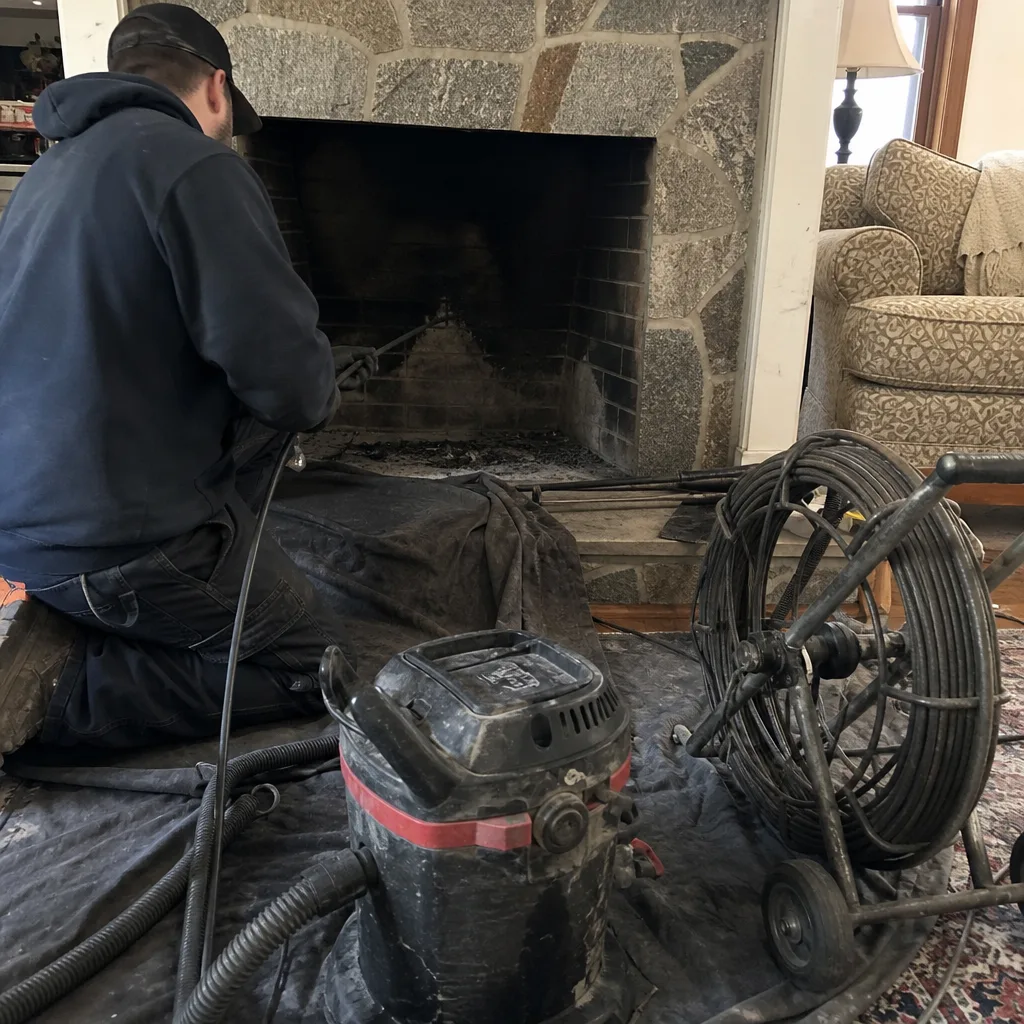
- Rotary cleaning system: A motor-driven whip head that spins at high speed and strips glaze creosote off flue walls. Cost: several thousand dollars. You can’t rent one, and you shouldn’t try to build one.
- Commercial HEPA vacuum: A chimney vacuum moves enough air to capture soot at the source. A Shop-Vac with a drywall filter will pull fine creosote dust through the filter and distribute it through the house. That smell lingers for weeks.
- Inspection camera: A waterproof, high-res camera head on a rigid or flexible rod that records the entire flue. We hand you the footage and a plain-English verdict, every time, no exceptions. A phone camera taped to a rod won’t do it.
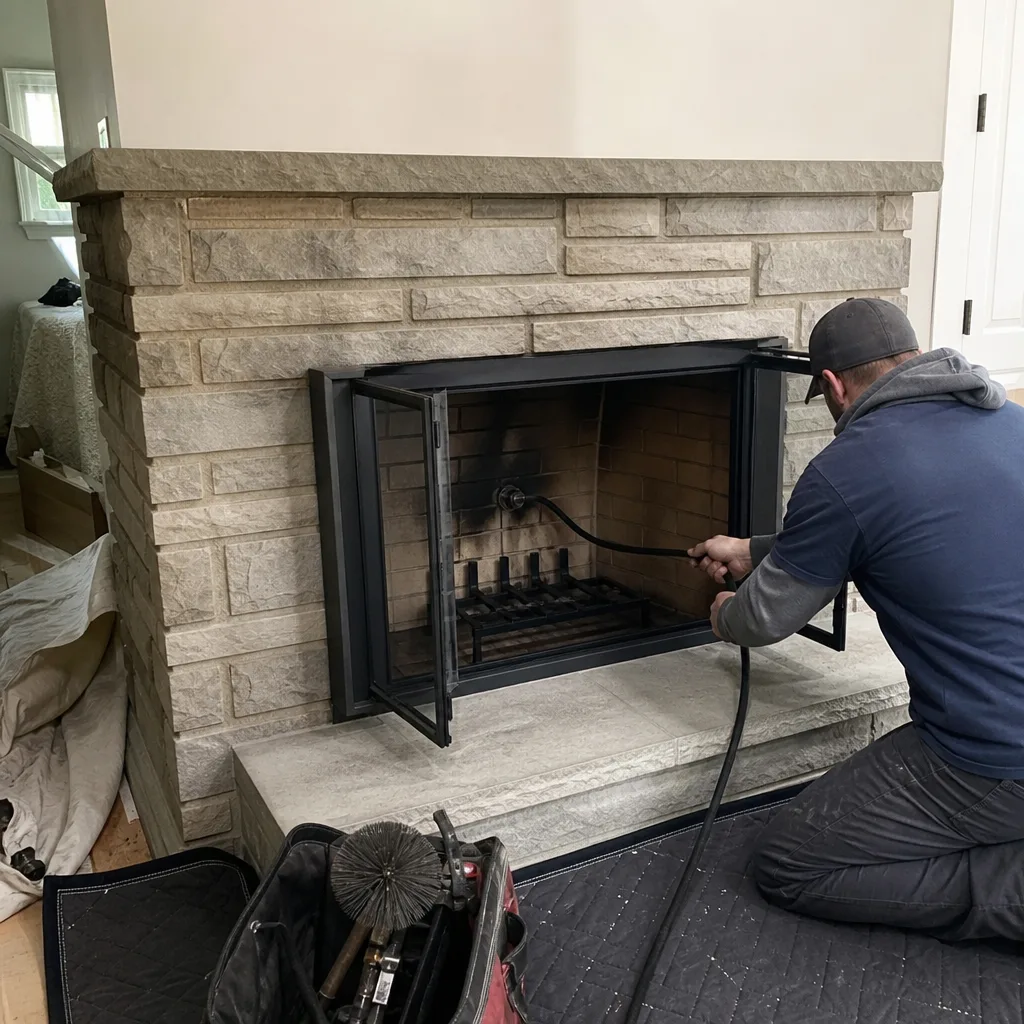
- Drop cloths and negative air setup: We seal the fireplace opening and run the vacuum so the house stays under negative pressure during cleaning. No dust escapes into the living room. DIY setups without this will dust the entire room.
- Quality replacement parts: When we find a bad cap or a cracked crown, we install parts from manufacturers like Gelco and Olympia Chimney, not the universal-fit cap from the hardware store that rusts in three seasons.
The honest version: a homeowner can buy a brush kit and a flashlight for under $100. A professional sweep carries $10,000 to $15,000 of equipment to the door. Most of that equipment exists for inspection and dust control, not for the brushing itself. The brushing is the easy part.
Mistakes That Turn a $60 Job Into a $1,200 Repair
We’ve been called to Coventry homes where the DIY attempt made our job harder and the final bill higher. These are the specific things that go wrong, and they’re all avoidable.
Brush size mismatch. Clay tile flues are typically 8×8 or 8×12 in older Connecticut homes. If you run a 10-inch round brush up an 8×8 clay flue, the wire bristles gouge the tile. Clay tile is soft. Once it’s scored, it spalls under heat cycling, and pieces start falling into the smoke chamber. That flue now needs a liner. The right brush matters more than the right effort.
Vacuuming without negative air. A standard wet/dry vacuum pulls air through the filter and exhausts it back into the room. Fine creosote dust is sub-micron. It goes through the filter, through the exhaust, and onto every surface in the living room. We’ve walked into houses where the homeowner’s DIY clean left a black film on the walls six feet from the fireplace. That cleanup cost more than the sweep would have.
Dropping the brush head. Fiberglass rods screw together. If one unscrews inside a masonry chimney with a bend, the brush head drops into the smoke chamber and you can’t reach it. Retrieving it requires disassembling part of the chimney or fishing it out with a magnet and a lot of patience. We’ve done both.
Cleaning from the top without roof harness. On a two-story Coventry colonial, the roof pitch is steep and the chimney is usually at the ridge. A fall from that height is life-changing or worse. The $189 sweep fee is not the thing you’re saving money on when you climb up there.
Thinking “it was just brushed last year” means it’s safe. Your flue doesn’t care how the fire looks. It cares how it breathes. A flue can look clean and still be dangerous if the liner is cracked or the crown is leaking. The brush removes creosote. It doesn’t certify safety.
How to Know If You Did the DIY Job Right
If you qualify under the checklist above and you do the brush job yourself, here’s how to verify you actually accomplished something, and the signs that you should stop and call someone.
- You should see bare metal. After brushing a single-wall pipe, shine a light up from the clean-out. The pipe walls should look like dark gray or silver metal, not black fuzz. If you still see black accumulation, you did not remove it and the pipe needs another pass or a different brush.
- You should be able to tap the pipe and hear it ring. A pipe with heavy creosote sounds dead when you tap it. A clean pipe rings. This is a low-tech but reliable check.
- You should not smell creosote at the stove while the fire is cold. A strong creosote smell with a cold stove means buildup remains somewhere, usually in the bends or behind the damper plate inside the stove itself.
- You should fill a small bucket with soot. A straight six-foot single-wall pipe with a season of burning will drop a quart to half a gallon of material into the clean-out. If nothing falls, the brush isn’t reaching the walls or the pipe was already clean.
- If anything about the job feels wrong, stop. If the brush sticks, if a rod unscrews, if you smell smoke in the house during the first fire after cleaning, stop and call. The mistakes compound from there.
Why Coventry’s Climate Makes This a Year-Round Question
Coventry sits in the northeastern Connecticut hills, and the burn season here runs from October through April. That’s six solid months of fires, often every night from Thanksgiving to St. Patrick’s Day. That kind of use puts a heavier load on a chimney than the occasional weekend fire in a milder climate.
The seasonal damp is a factor too. Coventry winters swing between freezing and thawing, and snow sits on chimney crowns for weeks. Water gets into any crack, freezes, expands, and widens the crack. By March, a crown that was fine in November has a new fissure. Our chimney cap & crown maintenance checklist for Coventry homeowners covers what to check before and after winter. That’s why we say once a year, burn or no burn. Chimneys break in the off-season too. A chimney swept in March may still have a crown problem by October, and the only way to catch it is the inspection that comes with a professional cleaning.
Creosote formation also varies with the wood. In Coventry, a lot of homeowners burn hardwoods like oak and maple that they’ve split and stacked themselves. Good hardwood, properly seasoned, produces less creosote than softwood or green wood. But a stove that is damped down overnight to hold a fire until morning burns cool and smolders, and that smolder produces creosote regardless of the wood. First-degree creosote is a brush job. Third-degree is a glaze, and you catch it early or you pay for a rotary clean.
Common Mistakes to Avoid
- Using a brush that’s too big for the flue. Wire bristles gouge clay tiles, and gouged tiles spall. Always measure the flue or use the manufacturer’s spec before running any brush up a masonry chimney.
- Assuming a clean flue equals a safe chimney. The flue can be spotless while the crown leaks, the flashing is loose, or the smoke chamber has a cracked wall. The inspection is the safety check.
- Skipping the drop cloths because “the vacuum will get it.” It won’t. Creosote dust goes airborne and hangs. Tape off the fireplace opening or use a professional negative-air setup.
- Cleaning a masonry chimney from the top without a harness and a spotter. Steep roof, cold weather, and no fall protection is how chimney DIY goes from hobby to hospital in Coventry every year.
- Brushing a third-degree glaze with a hand brush. Glazed creosote is hard and tar-like. A hand brush polishes it. It requires rotary chains or chemical removal, and it indicates the fire is not burning hot enough.
- Not checking the clean-out cap afterward. A loose clean-out cap lets air into the flue, which changes draft and can pull smoke into the house. Make sure it seats tight.
- Assuming insurance will cover a chimney fire without a professional inspection record. They’ll ask for it. If the last documented inspection is from five years ago, you’re in a weaker position.
When to Call a Professional
Call a professional if any of these apply: you have a masonry chimney with a clay tile liner, you see shiny black glaze inside the flue, you need an inspection for insurance or a sale, you can’t access the chimney safely from the ground, you smell smoke in the house during a fire, or the last professional cleaning was more than a year ago and you burn regularly. Also call if you just don’t want to be on your roof in January. That’s a perfectly good reason. Top Hat Chimney offers free estimates in Coventry, and Top Hat Chimney home is run by Wendell Pike, the owner, who has been climbing these roofs since 1999. Call (860) 743-7732 and a live person answers, any time of day.
Frequently Asked Questions
A standard chimney sweep and inspection in Coventry typically runs between $180 and $300 for a single flue with straightforward access, depending on height, condition, and whether a crown or cap needs attention. Chimney cap and crown work in Coventry adds cost only if needed, and Top Hat Chimney gives you the price before any tool comes off the truck. Call (860) 743-7732 for a free estimate.
You need a new liner if the camera inspection shows cracks, gaps, spalling, or missing mortar joints, not based on how the liner looks from the top or through the clean-out. Most liner damage is invisible from the ground and only shows up on camera footage. If the liner is intact, nobody honest will tell you to replace it.
Once a year, burn or no burn. Chimneys break in the off-season too, and the inspection that comes with a cleaning is what catches a cracked crown or a rusted cap before it becomes a leak. Homes that burn every night from October to April, which is common in Coventry, may need a mid-season check if creosote buildup is heavy.
Creosote accumulates, and the threshold between first-degree powder and third-degree glaze is reached faster than most homeowners expect. A chimney fire sounds like a freight train and can crack a liner in seconds, and even a slow smolder can damage mortar over a winter. Skipping a year also means skipping the inspection, which is where most serious problems are found before they become visible.
It isn’t when it’s done with a commercial HEPA vacuum and a sealed fireplace opening. The vacuum runs the whole time, the room stays under negative pressure, and drop cloths catch anything that escapes. The horror stories about soot through the house come from improper vacuuming, not from professional chimney cleaning.
You can get a partial look at the flue from the clean-out or the top, but a phone camera won’t show hairline cracks, smoke chamber damage, or the condition of the crown flashing. Professional inspection cameras are waterproof, high-res, and mounted on rigid rods that let the sweep see the entire flue, not just the straight section.
The Bottom Line
DIY chimney cleaning has a real but narrow place: a straight single-wall stove pipe with light creosote and easy clean-out access. Everything else, especially anything involving a masonry flue, an inspection need, a steep Coventry roof, or glaze creosote, belongs with a professional who carries a camera and a rotary system. The brush kit is a tool, not an inspection. If you burn wood in Coventry, get the flue swept and inspected once a year, and if you’re not sure whether your situation qualifies for DIY, call before you buy the kit. You can also browse more guides & resources on our blog.
Top Hat Chimney serves Coventry and the surrounding towns with upfront pricing, a live person on the phone, and a written 90-Day Done Right Promise on every job. For a free estimate, call (860) 743-7732.
Written by Wendell Pike, Owner at Top Hat Chimney, serving Coventry since 1999.